The price of everything is going up.
You feel it at the gas pump. You see it at the grocery store.
That dollar in your pocket buys a little less each day. It’s a slow, creeping rot. The financial experts call it “inflation.” The historians call it “currency debasement.”
It’s a pattern as old as empires. The Romans did it. The Byzantines did it. And now, it’s happening again.
They can print more money. They can add zeroes to a screen.
But they can’t print a potato.
They can’t print a jar of home-canned peaches. They can’t print a bushel of crisp, sweet apples pulled from your own tree.
Real wealth isn’t a number in a bank account that can be inflated away overnight. Real wealth is the land under your feet, the tools in your hands, and the food on your shelves.
This isn’t about fear. It’s about control. It’s about building a system that doesn’t depend on their fragile supply chains and their funny money.
It starts with a simple, powerful idea your grandparents understood in their bones: a root cellar.
Why a Root Cellar is the Ultimate Financial Hedge
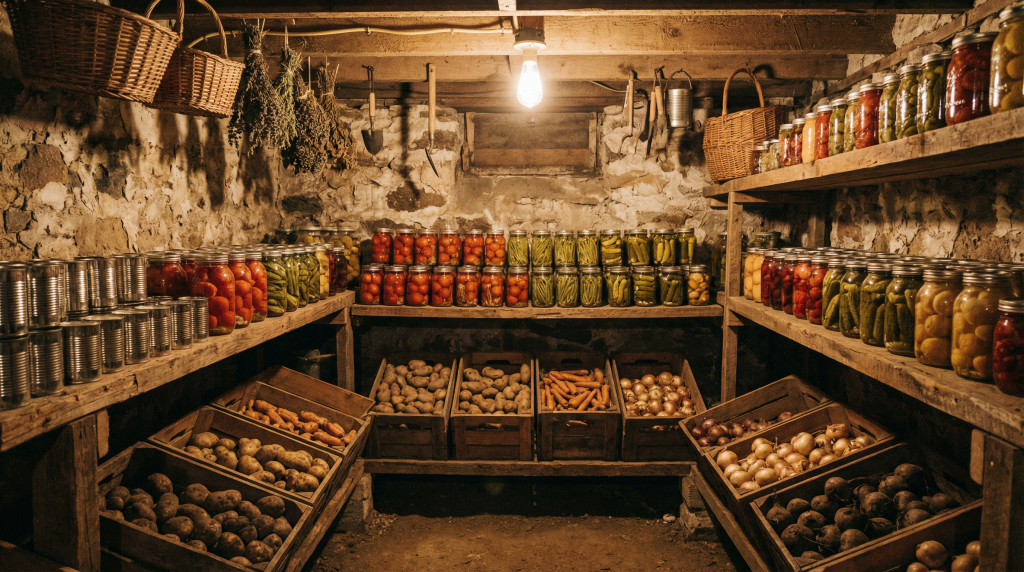
A root cellar is more than just a place to store vegetables. It’s a fortress of food security. It’s your personal, decentralized grocery store that’s always open and always stocked.
While the world worries about supply chain shocks and the shrinking value of their savings, you’ll have a tangible, edible asset that only grows in value as the cost of food climbs.
This is the ultimate act of self-reliance. It’s taking a portion of your wealth and converting it from a flimsy paper promise into something real, something you can eat.
The Three Types of Root Cellars (For Any Budget)
You don’t need a sprawling farm to build a root cellar. You can create a functional food storage space on almost any property, with almost any budget.
Here are three proven methods, from the dirt-cheap to the dedicated build.
1. The “Garbage Can” Root Cellar (Cost: Under )
This is the perfect starter cellar. It’s simple, effective, and can be built in an afternoon.
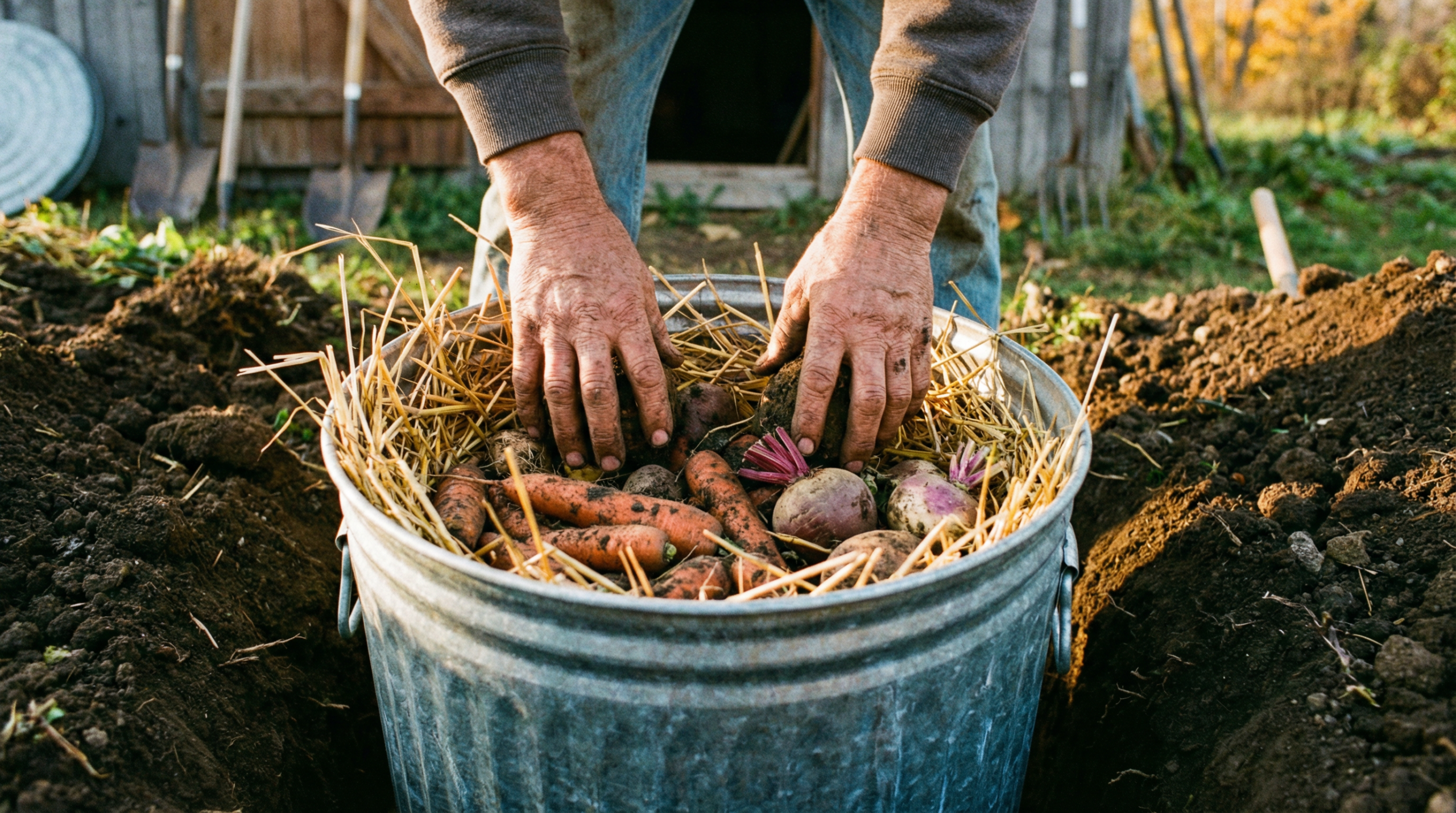
- How it works: You bury a clean, metal garbage can on its side in the ground. The earth’s natural, stable temperature keeps the contents cool and fresh.
- What you’ll need: A 20-30 gallon metal garbage can, a shovel, and some straw for insulation.
- The Process:
1. Dig a hole deep enough to bury the can on its side, with the lid facing out.
2. Place a 6-inch layer of straw in the bottom of the can.
3. Load your root vegetables (potatoes, carrots, beets) into the can.
4. Place another layer of straw on top.
5. Secure the lid and cover it with a bale of straw or a thick pile of leaves to insulate it from frost.
This simple setup can keep your root crops fresh for months, turning a $5 bag of seed potatoes into a winter’s worth of food.
2. The “Basement Corner” Root Cellar (Cost: 0 – 0)
If you have an unfinished basement, you have the bones of an excellent root cellar. The goal is to isolate a corner and keep it cool and moist.
- How it works: You frame and insulate a corner of your basement, ideally on the north side of your house where it’s coolest. You’ll add vents to bring in cool outside air and exhaust warmer air.
- What you’ll need: 2×4 lumber, rigid foam insulation, a pre-hung exterior door, and two vents (one high, one low).
- The Process:
1. Frame out a room in the corner of your basement.
2. Insulate the interior walls and ceiling to keep the room cold.
3. Install an insulated exterior door to seal the space.
4. Cut two holes for ventilation: one near the floor to let in cool air, and one near the ceiling to let out warm air. Cover them with screens to keep pests out.
This setup gives you a walk-in space to store a much larger variety of food, including canned goods, cured meats, and ferments.
And if you want to ensure your cellar has perfect airflow, even on still nights, a small, low-wattage fan can make all the difference. For true off-grid resilience, you can power it with a system like the Energy Revolution, an ancient invention that can wipe out power bills and generate energy on demand.
3. The “Walk-In” Root Cellar (Cost: ,000+)
This is the homesteader’s dream: a dedicated, underground walk-in root cellar. It’s a serious project, but it provides the most stable environment and the largest amount of storage.
- How it works: You excavate a space and build a small, underground room using cinder blocks, concrete, or even earthbags. An insulated roof covered with soil keeps the temperature rock-solid year-round.
- What you’ll need: This is a construction project. You’ll need excavation equipment (or a strong back), building materials, and a solid plan.
- The Process: This is too detailed for a single article, but the principle is the same: create an underground, insulated space with proper ventilation.
This is the ultimate food security system. It’s an asset that adds real, tangible value to your property and your life.
The 5 Golden Rules of Root Cellaring
No matter which design you choose, the principles of success are the same:
- Cool Temperatures (32-40°F / 0-4°C): This is the sweet spot for slowing down the natural decay of fruits and vegetables.
- High Humidity (85-95%): This prevents your root crops from drying out and shriveling.
- Good Ventilation: Fresh air is crucial to prevent the buildup of ethylene gas and mold.
- Total Darkness: Light tells vegetables to sprout. Keep them in the dark.
- Separate Your Fruits and Veggies: Apples and other fruits release ethylene gas, which can cause potatoes and other vegetables to spoil faster. Store them separately.
Your Ark of Abundance
Building a root cellar is a declaration of independence. It’s a vote for real food, real wealth, and real security.
In a world of uncertainty, you’ll have a pantry full of abundance. You’ll have a hedge against inflation that you can eat.
Noah didn’t wait for the rain to start building the ark. He prepared. He built resilience. He took action.
This is your chance to do the same. Don’t wait for the grocery shelves to go bare or for your savings to be inflated away. Build your own ark of abundance, one potato at a time.
For those who understand that true preparedness is about more than just food, the Noah/Ark preparedness offer provides a blueprint for total family security, from water purification to community defense. It’s the next logical step for those who are serious about building a resilient life.