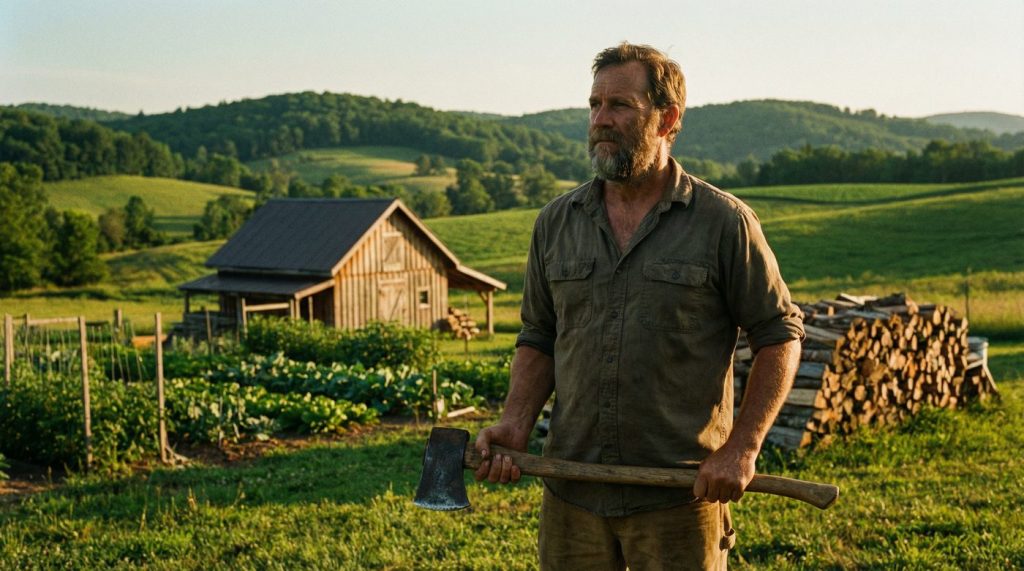
The largest empire in history didn’t fall to an outside enemy. It collapsed from within.
The Mongol Empire, a force that conquered everything from the Pacific to Eastern Europe, never lost a major battle when it was unified. But after its founder died, the empire tore itself apart. It became a victim of its own success — overextended, fragmented, and engaged in constant internal conflict. The supply lines that fed its armies became its greatest vulnerability. The wealth it extracted from conquered lands became the source of its own destruction.
Today, we live in a global empire of a different sort. An empire of complex supply chains, just-in-time delivery, and digital currency. And just like the Mongols, our greatest vulnerability isn’t an external threat. It’s the fragility of the system itself. A single war can sever our access to 20% of the world’s oil. A banking crisis can evaporate trillions in digital wealth overnight. The system that provides for us can, and will, fail.
But for the homesteader, the story is different. The homesteader’s wealth isn’t measured in dollars and cents, but in the productive capacity of their land and the skill of their hands. It’s a wealth that can’t be inflated away, can’t be hacked, and can’t be sanctioned. It is real, tangible, and unbreakable.
The Land Under Your Feet: Your First and Last Fortress
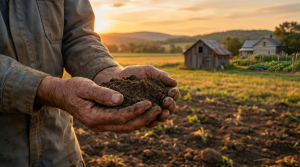
In an age of digital assets and fleeting financial instruments, land is the ultimate store of value. It is the foundation of all real wealth — the one asset that cannot be printed, cannot be deleted, and cannot be outsourced. For the homesteader, land is not just a place to live; it is a factory for producing food, water, and security.
But not all land is created equal. The true value of your homestead lies in its productive capacity. Here’s how to assess and improve it:
- Test Your Soil: For under $20, a comprehensive soil test kit will tell you everything you need to know about your land’s fertility — pH levels, nutrient deficiencies, organic matter content. This is the single highest-leverage investment you can make in your homestead.
- Manage Your Water: Water is life. Do you have a reliable source on your property? A well, a spring, a creek, or a pond? If not, now is the time to invest in a rainwater harvesting system. A simple 55-gallon drum can collect hundreds of gallons per year, providing a critical buffer against drought and municipal water failures.
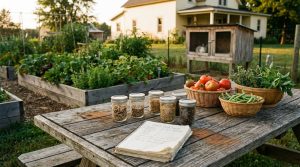
- Build Your Soil: Healthy soil is the engine of a productive homestead. Start a compost pile. Add organic matter — wood chips, leaves, grass clippings. The healthier your soil, the more food you can grow, and the less you’ll need to rely on external inputs.
Improving your land is not a one-time project; it is a continuous process of investment and stewardship. But every hour and every dollar you invest in your land is an investment in your family’s security and resilience.
The Tools in Your Hands: Forging Real-World Value
If land is the foundation of your wealth, then tools are the instruments you use to build it. In a world of disposable consumer goods, a set of high-quality, durable hand tools is a radical act of self-reliance. These are the tools that will still be working long after the power goes out, the gas stations run dry, and the global supply chain grinds to a halt.
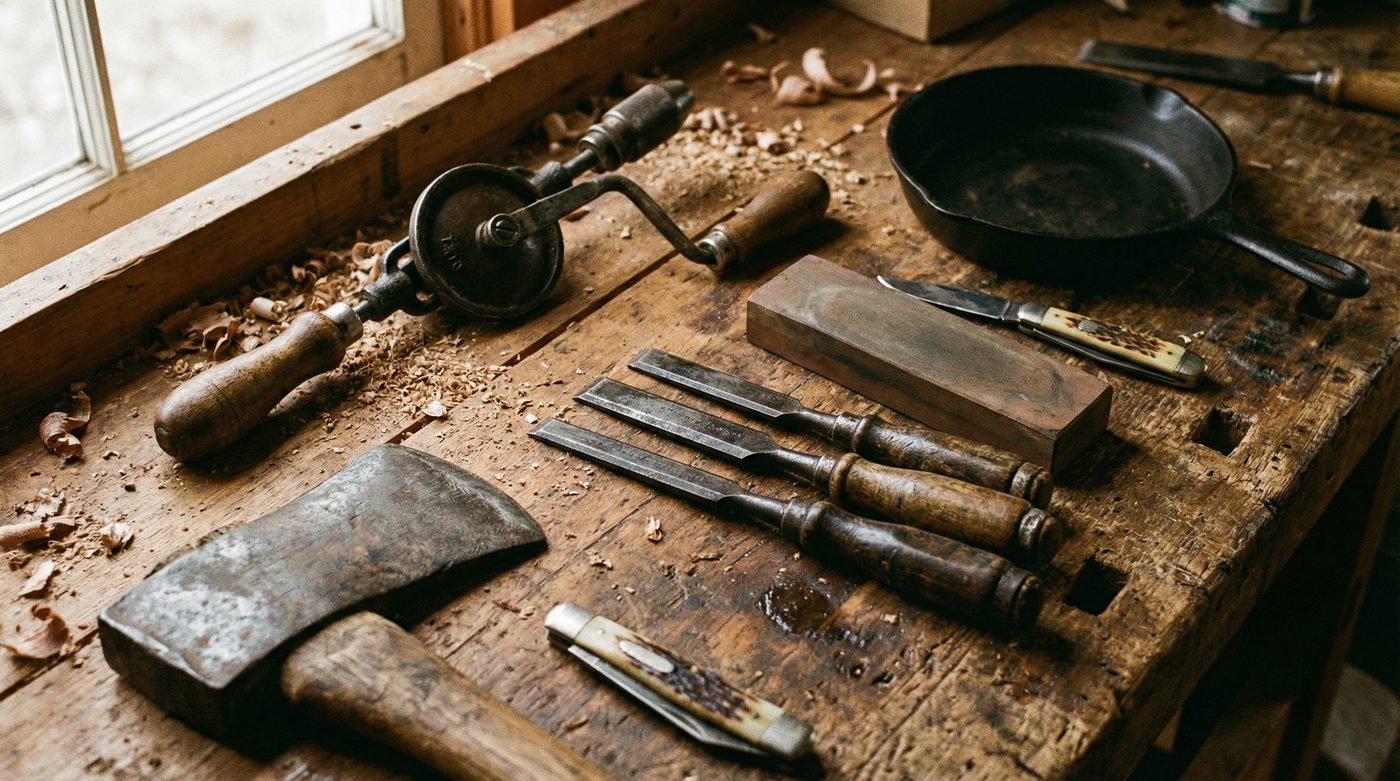
Here are the ten essential tools every serious homesteader should own and master:
- A Quality Axe — Not just for splitting firewood. A good axe can fell trees, shape wood, and serve as a general-purpose field tool. Budget $80–$150 for a Gransfors Bruks or Hults Bruk.
- A Broadfork — More efficient than a rototiller for aerating and loosening soil, without destroying soil structure. Around $100–$180 new, or find one used.
- A Scythe — For mowing grass, harvesting grains, and clearing brush. Quiet, efficient, and elegant. A quality Austrian scythe runs $150–$250.
- A Set of Chisels — From building furniture to framing a house, a good set of chisels is indispensable for any woodworking project. A starter set runs $40–$80.
- A Hand Drill (Brace and Bit) — Before there were power drills, there were hand drills. Slower, but more precise, and they will never run out of batteries. Find them at estate sales for $10–$30.
- A Crosscut Saw — For felling large trees and bucking logs. A two-man crosscut saw is a testament to human ingenuity. Look for vintage saws at $50–$150.
- A Sharpening Stone — A dull tool is a dangerous tool. A good set of sharpening stones is essential for keeping your tools in working order. Budget $30–$60.
- A Cast Iron Skillet — For cooking over an open fire or on a wood stove, cast iron is the most versatile and durable cookware you can own. A Lodge 12-inch runs about $30.
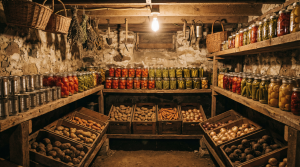
- A Pressure Canner — The only safe way to can low-acid foods like meat and vegetables. An All American 21.5-quart runs about $300 and will last a lifetime.
- A Good Fixed-Blade Knife — From the kitchen to the field, a quality knife is the most fundamental and versatile tool of all. Budget $80–$150 for a Mora or a Benchmade.
These are not just tools; they are investments in your own capability. Every tool you master is a step towards greater freedom and independence.
Escaping the Supply Chain: From Consumer to Producer
The ultimate goal of the homesteader is to transition from a passive consumer to an active producer. It is to build a life where you are no longer dependent on a fragile and unpredictable system for your basic needs.
This doesn’t have to be a daunting task. Start small. Pick one thing you buy at the grocery store every week, and learn how to produce it yourself. Build a simple cold frame to extend your growing season. Learn to bake your own bread. The journey of a thousand miles begins with a single step.
As you build your skills and your homestead, you will find that you are not just producing food; you are producing a new kind of wealth. A wealth that is measured not in the size of your bank account, but in the resilience of your family and the strength of your community.
If you want to start small — even on a 4-foot-by-4-foot plot — the 4ft Farm Blueprint is the fastest way to get your first harvest. It’s the sister system built specifically for people who want to start growing their own food without a large piece of land.
The Bottom Line: Build Wealth That Outlasts Empires
When empires crumble, tangible assets are all that remain. The chaos of the Mongol collapse taught a hard lesson that is just as relevant today: true security is not found in the promises of a distant government or the fluctuations of a digital market. It is found in the land under your feet and the tools in your hands.
If you are ready to start building real, lasting wealth — the kind that can weather any storm — then now is the time to act. Get your FREE Beginner’s Guide to Gold from GoldCo and learn how to protect your savings with the timeless stability of precious metals.
And remember the wisdom of Noah: he didn’t wait for the rain to start before he built the ark. The wise prepare before the crisis. Our Provision in the Drought guide shows you how to build a resilient homestead that thrives in any crisis.