The Kingdom of Aksum was once the undisputed hub of global trade.
Located in what is now Ethiopia, they controlled the sea lanes between the Roman Empire and India. They minted their own gold coins. They built one of the most sophisticated civilizations of the ancient world.
Then, in the 7th century, everything changed.
Arab Muslim forces took control of the Red Sea. Aksum was not conquered by force. They were simply bypassed. The trade routes shifted around them. Without the flow of global commerce, their revenue evaporated. Their state fragmented. By the 8th century, they had faded into a dark age.
The world moved on. They did not.
Right now, America is walking the exact same path.
As tariff wars escalate in 2026, US-China trade is down 30%. Global leaders are doubting US reliability and strengthening ties with Beijing. The BRICS nations are accelerating de-dollarization, building financial infrastructure that bypasses Washington entirely.
America is wielding tariffs as a weapon, forcing the world to build new routes around it. And the world is not waiting. China is filling every void.
Just like Aksum, we are not being conquered. We are being bypassed.
When the empire retreats from global trade, the supply chains it maintained go with it. The people who survive this transition will not be the ones who waited for the empire to fix itself.
The Aksumites who thrived after their empire’s collapse were the ones who had built self-sufficient homesteads in the fertile highlands. They survived because they produced their own food.
Real wealth is the land under your feet and the tools in your hands — not a supply chain that a single tariff war can sever.
Here is how you build food sovereignty in your own backyard, before the global supply chains fracture completely.
Phase 1: The 4-Foot Survival Garden (Cost: $50 – $100)
You do not need acres of land to start building food sovereignty. You just need a plan.
The most critical mistake beginners make is trying to grow everything at once. Instead, focus on high-calorie, high-yield crops that can sustain you in a crisis.
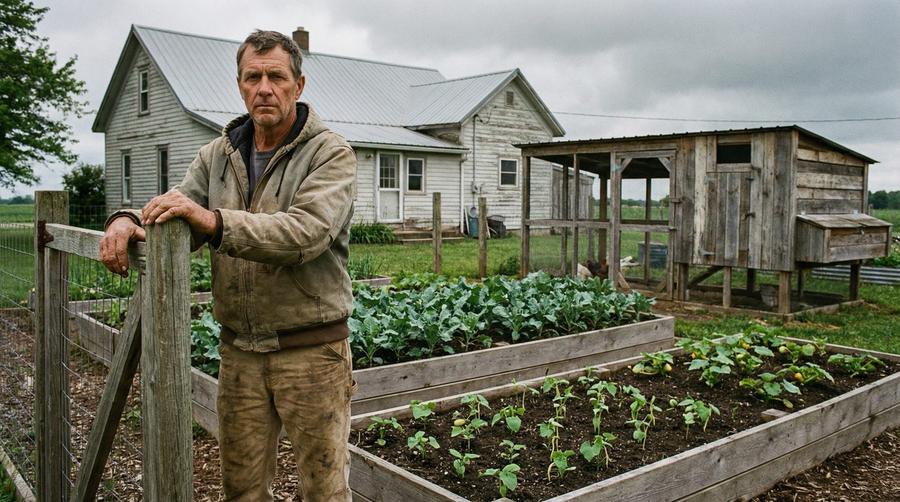
A simple 4×4 foot raised bed can produce a massive amount of food if managed correctly using the Square Foot Gardening method.
What to plant for maximum survival value:
- Potatoes: High calorie density, easy to store in a cool, dark place.
- Beans: Packed with protein and nitrogen-fixing for the soil.
- Squash: High yield, long shelf life without refrigeration.
- Kale: Nutrient-dense and cold-hardy.
The Setup:
- Build a 4×4 frame using untreated lumber or cinder blocks.
- Fill it with a mix of 1/3 compost, 1/3 peat moss, and 1/3 vermiculite.
- Divide the bed into 16 one-foot squares using string.
- Plant your seeds according to the spacing requirements for each crop.
This is your baseline. If the grocery store shelves go empty, this small plot will keep you fed.
Phase 2: Protein Independence (Cost: $200 – $400)
Vegetables will keep you alive, but protein will keep you strong.
When global trade fractures, the cost of meat will skyrocket. Feed costs will rise, transport costs will rise, and the industrial meat complex will struggle to maintain output.
You need a local protein source. The easiest and most efficient option for a homestead is a small flock of laying hens.
Why Chickens?
- Daily Yield: A healthy hen will lay 5-6 eggs per week.
- Pest Control: They eat ticks, grubs, and garden pests.
- Fertilizer: Chicken manure is incredible for your garden (once composted).
The Setup:
- The Coop: You can build a simple coop from scrap wood or buy a pre-made kit. Ensure it is predator-proof with hardware cloth, not chicken wire.
- The Flock: Start with 4-6 hens. Breeds like Rhode Island Reds or Orpingtons are hardy and reliable layers.
- The Feed: Stock up on commercial feed, and supplement with kitchen scraps, garden waste, and free-ranging bugs.
Four hens will give you roughly two dozen eggs a week. That is a massive step toward true food sovereignty.
Phase 3: The Preservation System (Cost: $150 – $300)
Growing food is only half the battle. If you cannot preserve it, you will starve in the winter.
The Aksumites survived in the highlands because they knew how to store their harvests. You must learn the same skills.
The Three Pillars of Preservation:
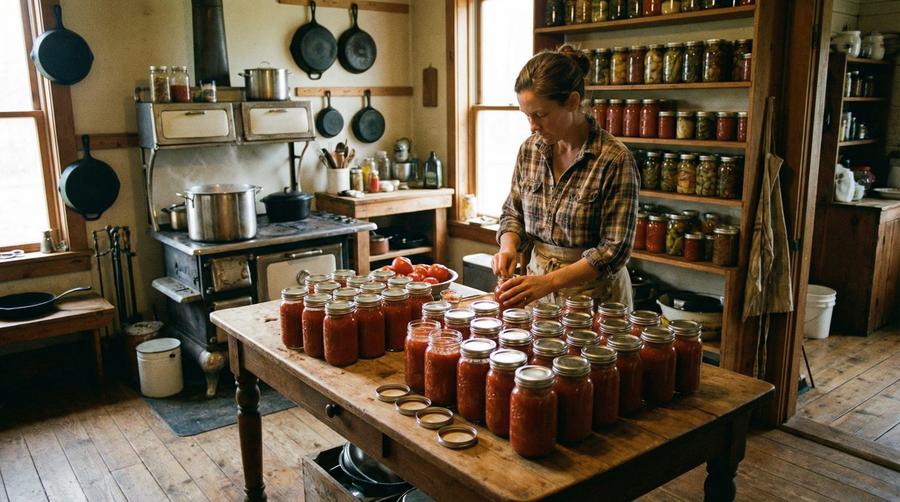
- Water Bath Canning: Perfect for high-acid foods like tomatoes, pickles, and fruit jams. You need a large pot, a canning rack, and mason jars.
- Dehydrating: Removes moisture to prevent spoilage. Great for herbs, fruits, and making jerky. A basic electric dehydrator costs around $50.
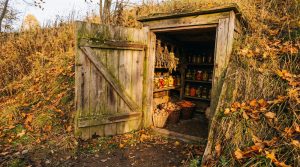
- Root Cellaring: You do not need an actual cellar. A cool, dark basement or even a buried trash can works for storing potatoes, carrots, and onions through the winter.
When you can walk into your pantry in February and pull out a jar of tomatoes you grew in August, you are no longer dependent on the global supply chain.
The Window to Act Is Closing
The pattern is 1,300 years old. Centralized global trade systems fracture and collapse. Decentralized, self-reliant people survive and rebuild.
America is isolating itself. The trade routes are shifting. The supply chains are becoming fragile.
Do not wait for the empire to save you. Build your local resilience now. Plant the garden. Get the chickens. Learn to can.
Your homestead is your empire. Defend it.
Ready to take the next step?
Looking for off-grid energy solutions? This Ancient Invention Wipes Out Power Bills and Generates Energy On Demand.
Need emergency rations right now? Elon’s bunker food is not from Amazon. See what the billionaires are stockpiling here.