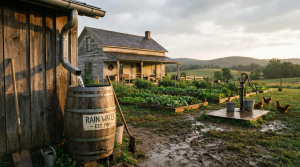
Want to know what happens when a superpower closes its borders and chokes its own supply chain?
Look at the Ming Dynasty.
In the 15th century, they were the wealthiest empire on earth. Then, they built walls. They banned foreign trade. They tried to protect their economy by cutting it off from the world.
The result? A massive silver shortage. Deflation. Skyrocketing costs for basic goods.
The peasants who relied on the imperial supply chain starved.
But the families who survived? They were the ones who had already decoupled from the system. They had local food, local skills, and local networks.
They had real wealth.
Today, America is repeating this exact pattern. Tariffs are fracturing supply chains. The cost of everything from tools to seeds is climbing. The recession clock is ticking.
If you are relying on the global supply chain to feed your family, you are vulnerable.
But you can fix this. You can build the same kind of resilience that saved families 600 years ago.
Here is how to build real wealth on your homestead before the next supply chain shock hits.
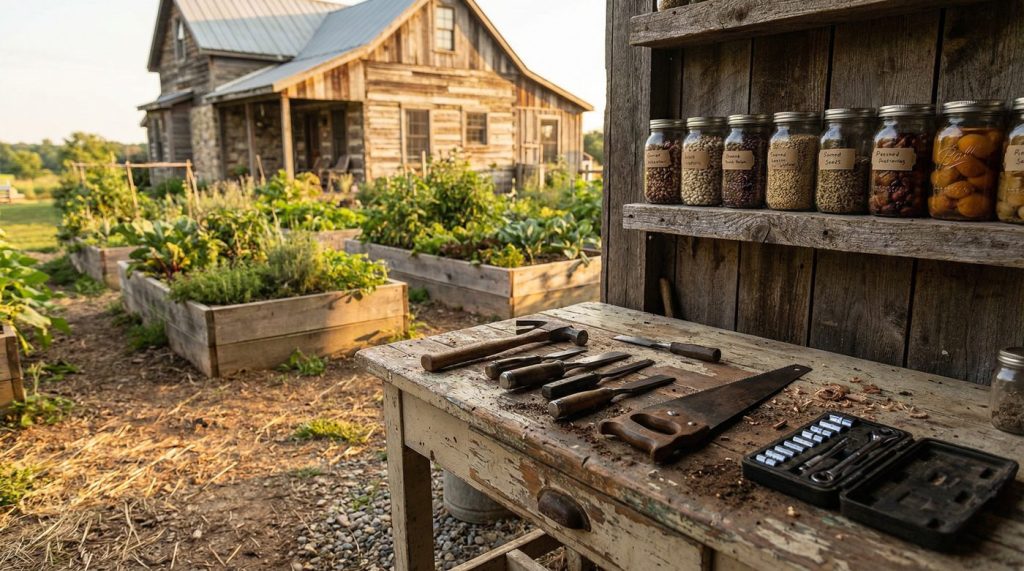
1. Build Tool Sovereignty
When supply chains break, you can’t just order a replacement part on Amazon.
You need the ability to fix things yourself. You need tool sovereignty.
This doesn’t mean you need a massive, expensive workshop. It means having the right foundational tools to handle 90% of homestead repairs.
The Foundation (Cost: $100–$250)
Start with high-quality hand tools. These don’t require electricity and will last generations if cared for properly.
- A heavy-duty axe and maul for processing wood.
- A quality handsaw and crosscut saw.
- A comprehensive socket and wrench set.
- Pliers, screwdrivers, and a sturdy hammer set.
The Production Tier (Cost: $300–$800)
Once your foundation is set, add power tools that run on batteries (which you can charge with solar).
- A cordless drill and impact driver.
- A circular saw and reciprocating saw.
- An angle grinder for metalwork.
The Ultimate Hedge (Cost: $500–$1,500)
For true independence, learn basic blacksmithing and welding.
- A small anvil and forge.
- A basic stick welder.
- The ability to fabricate your own brackets, hinges, and replacement parts.
Real wealth is the ability to repair a broken tractor when the parts store is empty.
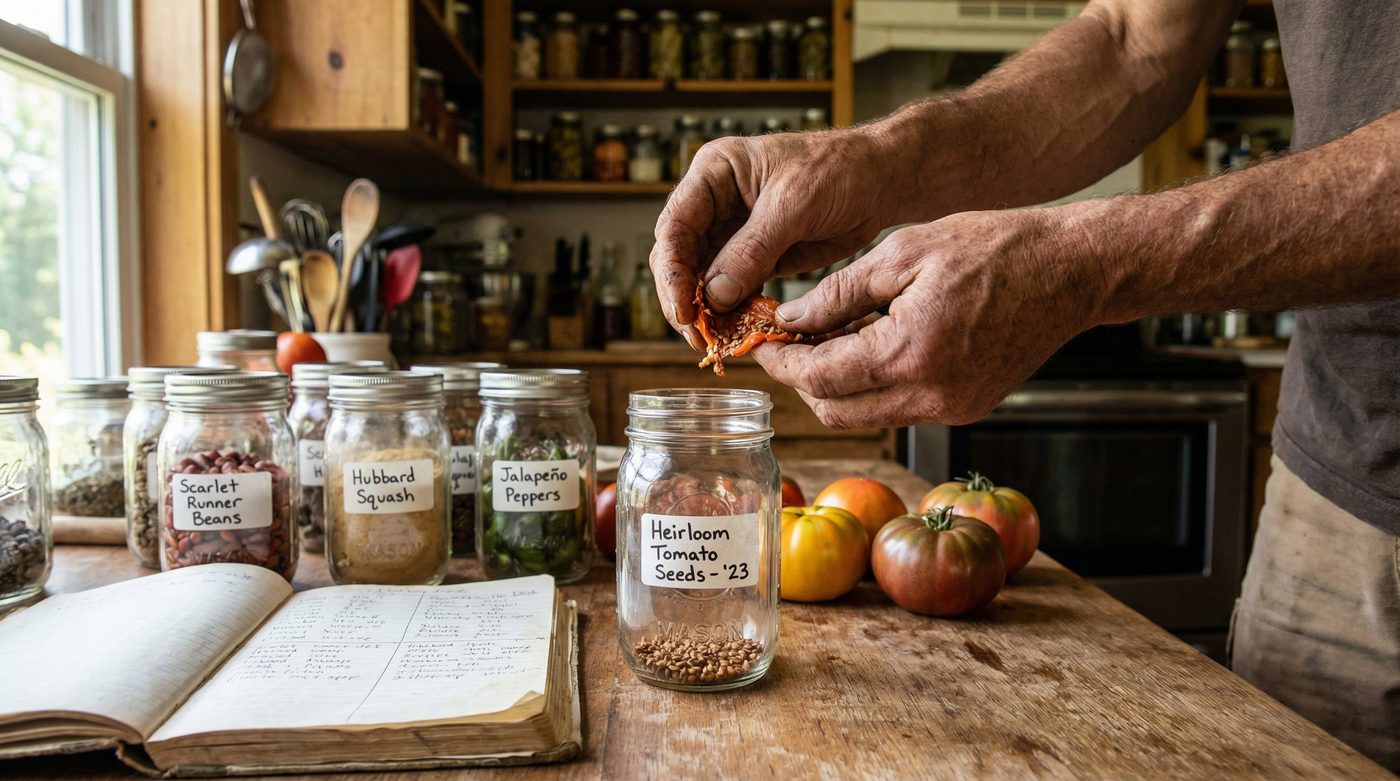
2. Master Seed Saving
Seeds are the ultimate currency.
If you buy seeds every spring, you are renting your food supply. If you save seeds, you own it.
During the Ming collapse, the families who thrived didn’t just grow food—they grew the next generation of food.
Start Simple (Cost: Free)
Begin with easy-to-save seeds like tomatoes, beans, and peas.
- Let the best fruit fully ripen on the vine.
- Extract the seeds, clean them, and dry them completely.
- Store them in a cool, dark, dry place (glass jars work perfectly).
Expand Your Bank (Cost: $20–$50 for storage supplies)
Move on to biennials like carrots and onions, which require leaving the plant in the ground over winter to produce seed the following year.
The Goal: Build a localized seed bank adapted to your specific soil and climate. These seeds will perform better than anything you can buy from a catalog.
Real wealth is a mason jar full of heirloom seeds.
3. Decentralize Your Energy
The Ming Dynasty relied on a centralized system that eventually failed. Today, our power grid is just as fragile.
You need to produce your own energy.
The Immediate Backup (Cost: $500–$1,000)
Start with a reliable dual-fuel generator. It won’t run your whole house, but it will keep your freezers cold and your well pump running during an outage.
The Sustainable Solution (Cost: $1,500–$5,000)
Invest in a small, off-grid solar setup.
- A portable power station (like a Jackery or EcoFlow).
- 2–4 solar panels.
- This is enough to charge your power tools, run lights, and keep communication devices powered indefinitely.
The Ultimate Independence (Cost: $10,000+)
A full home solar array with battery backup. This completely removes you from the fragile grid.
Real wealth is the lights staying on when the rest of the county goes dark.
4. Master Local Food Preservation
Growing food is only half the battle. If you can’t preserve it, you are still vulnerable to seasonal scarcity.
The Ming peasants who survived the winter didn’t rely on imported grain. They relied on what they had preserved during the harvest.
When the global supply chain falters, the grocery store shelves empty in hours. Your pantry needs to be your personal grocery store.
The Foundation: Water Bath Canning (Cost: $50–$100)
This is the easiest way to start preserving high-acid foods like tomatoes, fruits, and pickles.
- A large water bath canner (or any large stockpot with a rack).
- Mason jars, new lids, and rings.
- Basic canning tools (jar lifter, funnel, bubble popper).
The Next Level: Pressure Canning (Cost: $100–$200)
To safely preserve low-acid foods like meat, beans, and most vegetables, you must use a pressure canner.
- A high-quality pressure canner (like an All American or Presto).
- The ability to process your own livestock or bulk-purchased meat.
- This turns perishable goods into shelf-stable meals that last for years.
The Ultimate Preservation: Dehydrating and Freeze-Drying (Cost: $50–$3,000)
Removing moisture is one of the oldest and most effective preservation methods.
- A basic dehydrator ($50–$150) is perfect for herbs, fruit leather, and jerky.
- A home freeze-dryer ($2,500+) is a major investment, but it allows you to preserve entire meals for up to 25 years with minimal nutrient loss.
Real wealth is a pantry full of food that doesn’t require electricity to stay safe.
5. Build a Local Barter Network
The final piece of the puzzle is community.
When the Ming Dynasty banned foreign trade, local trade became the only way to survive. You cannot produce everything yourself. You will eventually need something you don’t have.
If you have extra eggs, but need firewood, you need a network.
Start Small (Cost: Free)
Get to know your neighbors. Find out what they produce and what they need.
- Trade your excess garden produce for their homemade bread.
- Offer your mechanical skills in exchange for help with a building project.
- Build trust before a crisis hits.
Expand Your Reach (Cost: Free)
Join local homesteading or agricultural groups.
- Attend farmers markets and talk to the vendors.
- Join local online groups dedicated to self-reliance and bartering.
- Identify the people in your area who have critical skills (welders, medics, mechanics).
Real wealth is a community that supports each other when the system fails.
Your Homestead is Your Empire
The Ming Dynasty collapsed because it starved its own economic engine.
Don’t let your household suffer the same fate.
Stop relying on fragile supply chains. Stop trusting the system to provide for you.
Start building real wealth. Grow your own food. Save your own seeds. Master your own tools.
When the system breaks, your homestead will be your empire.
Ready to take the next step?
You don’t have to figure this out alone. The most successful homesteaders learn from those who have already built resilient systems.
Discover how to build a self-sustaining homestead that thrives in any economy.
This blueprint shows you exactly how to secure your food, water, and energy—before the next crisis hits.
Click here to see the blueprint now.
Looking for more ways to protect your family’s wealth? Get this free special report on surviving the next financial crisis.