In ancient Egypt, Queen Cleopatra and her father had a massive debt problem. They owed the Roman Empire a fortune. So, they did what governments always do when they run out of money: they cheated.
They took their pure silver coins and started mixing in cheap copper. By the end of their rule, the coins were only 25% silver.
What happened next? Prices exploded. The cost of wheat went up 1,000%. Farmers couldn’t afford to buy tools or seeds. The government tried to force price controls, but it failed. The empire collapsed from the inside before the Roman legions even arrived.
Sound familiar?
Today, the US national debt is $39 trillion. The government is paying $1.2 trillion a year just in interest. The dollar has lost nearly 10% of its value recently. When they print more money, your money buys less. That is exactly why your grocery bill is so high right now. It is a hidden tax.
The people who survived the collapse of Egypt weren’t the ones hoarding silver coins. They were the ones who had their own food, their own water, and their own tools. They didn’t need the government’s money to eat. They had built local systems that didn’t care what the currency was doing.
You need to do the same thing right now. You cannot save your way out of inflation. You have to produce your way out of it.
Here are three practical ways to build a homestead system that ignores inflation and keeps your family fed, no matter what the dollar does.
1. The “Inflation-Proof” Meat Supply: Backyard Rabbits
Meat prices are skyrocketing. Beef and chicken are getting more expensive every month because the cost to feed and transport those animals is going up. If you want to beat inflation, you need to grow your own protein.
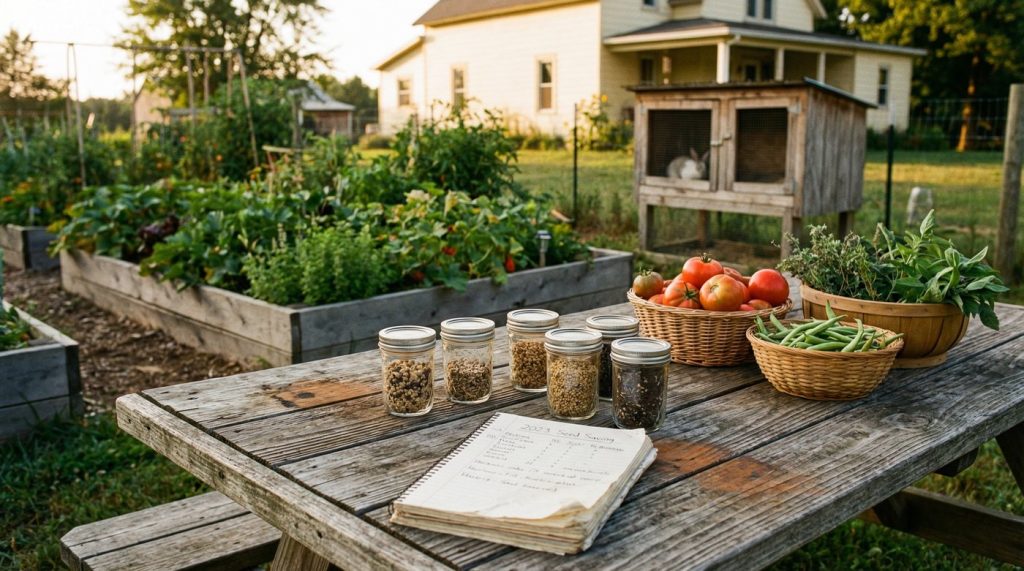
Rabbits are the ultimate inflation-proof meat. They take up very little space, they are quiet, and they breed fast. A single breeding trio (two females and one male) can produce over 300 pounds of meat in a single year.
Real Steps:
- Build the Hutch: Do not buy a flimsy pet store cage. Build a solid wood frame with 14-gauge welded wire. You need a wire floor so the droppings fall through.
- Set Up the Feed: Rabbits eat pellets, but you can supplement their diet with grass, weeds, and garden scraps to lower your feed costs even more.
- Harvest: Rabbits are ready to harvest in just 8 to 10 weeks.
Real Costs:
| Item | Cost |
|---|---|
| Wood and wire for a 3-hole hutch | $150 |
| Feed and water bowls | $40 |
| Breeding trio (New Zealands or Californians) | $60–$100 |
| Total Setup | ~$250–$300 |
Real Tools Needed: Wire cutters, staple gun, drill and screws.
Why it beats inflation: Once you have the breeding stock, your only ongoing cost is feed. And if you grow a “rabbit garden” with alfalfa and clover, you can cut that cost down to almost zero.
2. The “Zero-Dollar” Fertilizer System: Vermicomposting
Commercial fertilizer prices are tied directly to oil and natural gas. When energy prices go up, fertilizer goes up. If you rely on store-bought fertilizer for your garden, you are still trapped in the system.
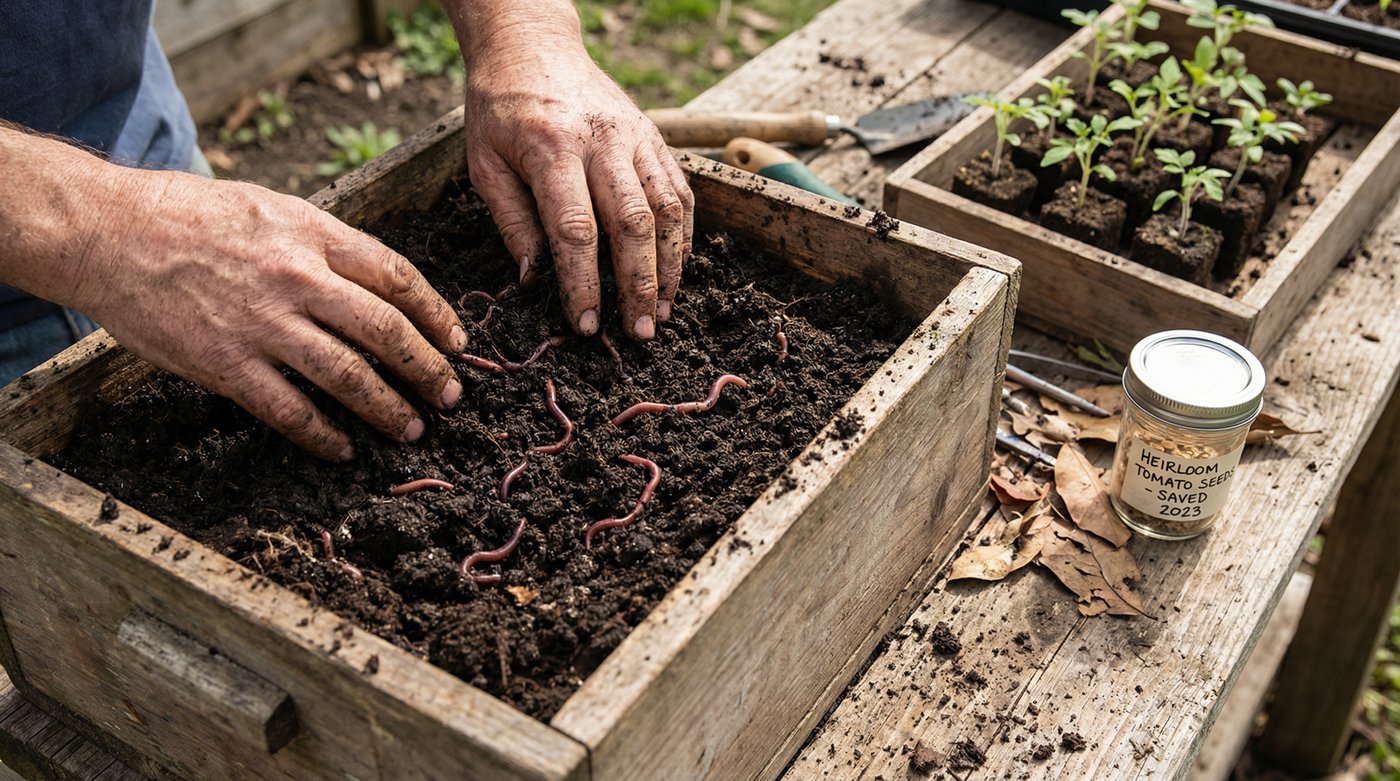
You need to make your own. The best way to do this is with worms. Vermicomposting uses red wiggler worms to turn your kitchen scraps and cardboard into “black gold” — the richest, most nutrient-dense fertilizer on earth.
Real Steps:
- Get a Bin: You don’t need a fancy system. Two dark plastic storage totes work perfectly. Drill holes in the bottom of the top tote for drainage, and holes in the sides for air.
- Add Bedding: Shred up plain brown cardboard and wet it until it feels like a damp sponge.
- Add Worms and Food: Put in your red wigglers and start feeding them fruit scraps, vegetable peels, and coffee grounds. Avoid meat and dairy.
- Harvest the Castings: Every few months, scoop out the dark, rich worm castings and mix them into your garden soil.
Real Costs:
| Item | Cost |
|---|---|
| Two plastic totes | $20 |
| 1 lb of Red Wiggler worms | $35 |
| Bedding and food | $0 (use your trash) |
| Total Setup | $55 |
Why it beats inflation: You are turning garbage into high-grade fertilizer. You will never have to buy a bag of Miracle-Gro again.
3. The “Off-Grid” Seed Bank: Seed Saving
Buying seeds every spring is a tax on your garden. If the supply chain breaks down, or if seed companies double their prices, you are out of luck. A true homesteader saves their own seeds. This makes your food supply 100% independent.
Start with easy crops like tomatoes, beans, and peas. You must use “heirloom” or “open-pollinated” varieties. Hybrid seeds will not grow the same plant the next year.
Real Steps (For Tomatoes):
- Ferment: Squeeze the seeds and juice from a ripe heirloom tomato into a jar. Let it sit on the counter for 3 days until a layer of mold forms on top. This eats away the gel coating around the seed.
- Rinse: Add water, stir, and pour off the mold and floating bits. The good seeds will sink to the bottom.
- Dry: Strain the seeds and spread them on a paper plate (not a paper towel — they will stick). Let them dry for a week.
- Store: Put the dry seeds in a small glass jar with a silica gel packet. Keep it in a cool, dark place.
Real Costs:
| Item | Cost |
|---|---|
| Mason jars (dozen) | $15 |
| Silica gel packets | $5 |
| Total Setup | $20 |
Why it beats inflation: One $3 heirloom tomato can give you 100 seeds. That is enough to grow hundreds of pounds of food next year, for free.
Your Homestead is Your Empire
The Ptolemaic Kingdom of Egypt fell because the people at the top destroyed the money, and the people at the bottom relied on that money to survive.
Do not make the same mistake. The $39 trillion debt spiral is already here. The inflation is already happening. You cannot control what the Federal Reserve does, but you can control what happens in your own backyard.
Build your meat supply. Make your own fertilizer. Save your own seeds.
When you produce what you need, you stop being a victim of the economy. You become your own economy.
Next Steps for Your Homestead
If you want to start producing your own food but you don’t have a lot of space, you don’t need a 100-acre farm. You can grow a massive amount of food in a very small area if you know the right methods.
➡️ Click here to see how the 4-Foot Farm Blueprint can help you grow a survival garden in any space.
And remember, the time to prepare is before the storm hits.
(Read more about the historical parallel of the $39 Trillion Debt Spiral and the fall of Egypt at American Downfall.)