The Ming Dynasty made a fatal mistake. They burned their massive Treasure Fleet. They closed their ports. They made foreign trade a crime punishable by death.
They called it the Haijin, or the “Sea Ban.”
The goal was to protect the empire. The result was a disaster. The silver supply collapsed. Deflation crushed the working class. Soldiers stopped getting paid and mutinied. In 1644, the last Ming Emperor hung himself as rebels broke through the gates of Beijing.
The empire didn’t fall to a stronger enemy. It starved its own economic engine.
History is repeating itself right now. America is building its own walls. The new tariff regime is expected to cost the average household $600 to $700 in 2026. The national debt just crossed $39 trillion. Inflation is creeping back up as supply chains fracture.
When the government tries to protect a broken system by cutting off trade, the regular people pay the price.
But some Ming peasants survived the collapse. How? They didn’t rely on the imperial supply chain. They had tools, seeds, and skills. They knew how to preserve what they grew.
Real wealth is not what you can buy at a big box store. Real wealth is what you can grow, build, and fix.
Here are four practical ways to build your own economic sovereignty right now, using old-school food preservation skills.
1. The Lost Art of Root Cellaring
Estimated Cost: $0 to $50
Time to Setup: 1 Weekend
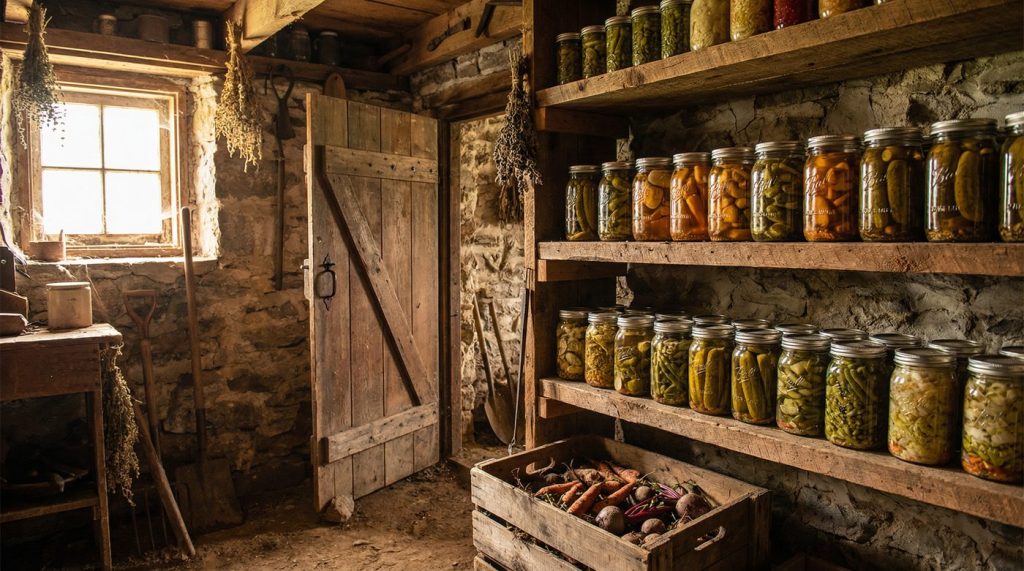
Before refrigerators, people used the earth to keep food fresh through the winter. The ground below the frost line stays a steady, cool temperature year-round.
You do not need to build a massive underground bunker to use this method. You can build a micro-root cellar in your backyard.
Real Steps:
- Dig a hole in a well-drained area of your yard. Dig deep enough so the top of your container will be below the frost line.
- Get a galvanized steel metal trash can. Drill a few small holes in the bottom for drainage.
- Place the can in the hole. Pack dirt tightly around the outside.
- Layer your root crops (carrots, potatoes, beets, turnips) inside the can. Separate the layers with damp sand, peat moss, or sawdust. Do not let the vegetables touch each other.
- Put the lid on. Cover the top with a thick layer of straw bales or a heavy tarp to insulate it from freezing air.
Real Tools Needed:
- Shovel (already own)
- Galvanized steel trash can ($35 – $45)
- Clean play sand or untreated sawdust ($5 – $10)
2. Water Glassing Eggs for Winter
Estimated Cost: Under $30
Time to Setup: 30 Minutes
When supply chains break, protein gets expensive fast. Chickens naturally stop laying eggs in the dark days of winter. In the 1800s, homesteaders solved this problem by “water glassing” their spring and summer eggs.
This method seals the pores of the eggshell. It keeps raw, fresh eggs perfectly good for 12 to 18 months sitting on a shelf at room temperature. No electricity required.
Real Steps:
- You must use clean, unwashed, farm-fresh eggs. Store-bought eggs will not work because the protective “bloom” has been washed off.
- Weigh out 1 ounce of pickling lime (calcium hydroxide) for every 1 quart of filtered water.
- Whisk the lime into the water until it dissolves.
- Gently place your unwashed eggs into a food-grade bucket.
- Pour the lime water over the eggs until they are completely submerged.
- Put a tight lid on the bucket and store it in a cool, dark place.
Real Tools Needed:
- Food-grade 5-gallon bucket with lid ($15)
- Pickling lime ($8 – $12)
- Kitchen scale ($10)
3. Fermentation as Food Security
Estimated Cost: Under $20
Time to Setup: 1 Hour
The Ming peasants who survived the winter relied heavily on fermented cabbage and vegetables. Fermentation does not just preserve food. It actually makes the food more nutritious by creating healthy probiotics.
It is one of the cheapest and safest ways to store the harvest.
Real Steps:
- Shred a head of fresh cabbage.
- Weigh the cabbage. Calculate 2% of that weight. That is exactly how much non-iodized salt you need to add.
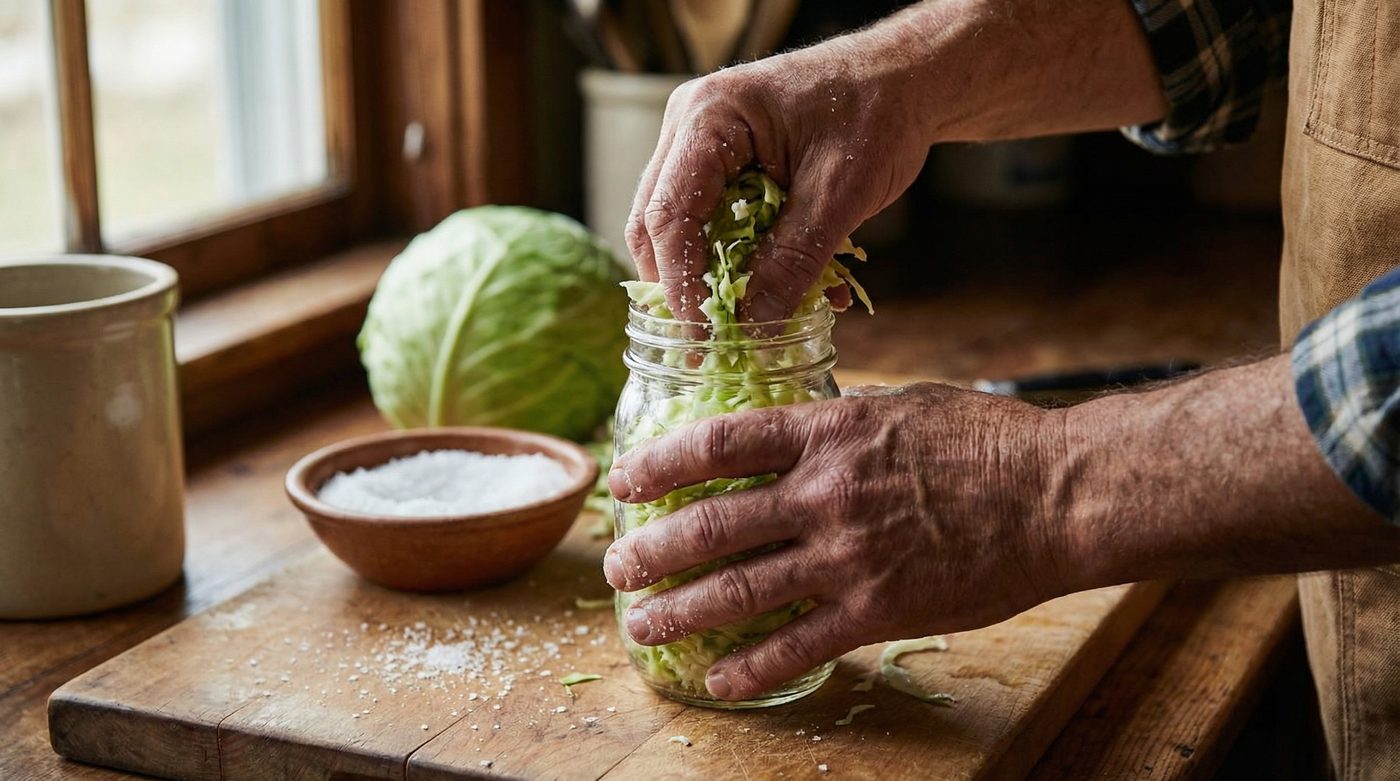
- Massage and squeeze the salt into the cabbage for about 10 minutes. The salt will pull the water out of the cabbage, creating a natural brine.
- Pack the cabbage tightly into a glass mason jar. Push it down hard so the liquid rises above the cabbage.
- Place a glass weight (or a smaller jar filled with water) on top to keep the cabbage completely submerged under the liquid. If it is under the brine, it is fine.
- Put a loose lid on it and let it sit on your counter for 1 to 4 weeks. Taste it until you like it, then move it to a cool place.
Real Tools Needed:
- Glass mason jars ($15 per case)
- Non-iodized sea salt or kosher salt ($5)
- Glass fermentation weights ($15)
4. Dehydration for Long-Term Storage
Estimated Cost: $50 to $150
Time to Setup: 2 Hours
Removing moisture stops food from rotting. Dehydrated food takes up very little space and lasts for years if stored correctly. It is the ultimate hedge against food inflation.
Real Steps:
- Slice fruits, vegetables, or lean meats very thin and uniform.
- Lay them out on dehydrator trays. Do not overlap the pieces.
- Run the dehydrator until the food is completely dry and snaps when you bend it.
- For long-term storage, place the dried food into Mylar bags.
- Drop in an oxygen absorber packet and seal the bag with a hot iron or hair straightener.
Real Tools Needed:
- Basic electric food dehydrator ($40 – $100)
- Mylar bags and oxygen absorbers ($25)
Your Homestead Is Your Empire
The Ming Dynasty collapsed because it cut itself off from the world without having a backup plan. They built a wall and starved behind it.
Do not let the new tariff tax empty your wallet. Do not wait for the supply chain to fracture before you learn how to feed your family.
Build your own supply chain. Learn to grow it. Learn to preserve it.
Take Action Today:
If you want to start growing your own food but don’t have a lot of space, you need to learn the high-yield methods that actually work. Check out the 4-Foot Farm Blueprint here to start growing a massive amount of food in a tiny space.
If you want a complete, step-by-step system to secure your family’s food, water, and power before the next crisis hits, watch this video on the Noah’s Ark Survival Blueprint. It shows you exactly how to prepare for the coming storm.
Finally, with the national debt hitting $39 trillion and inflation rising, your savings are at risk. Get your FREE Special Report from GoldCo here to learn how to protect your retirement from the coming economic contraction.