The grocery receipt does not lie.
In 2019, a family of four spent an average of $250 a month on groceries. Today, that same basket of food costs closer to $450. That is not inflation — that is a structural shift in who controls your food supply and what they charge you for the privilege of eating.
The tariffs announced in early 2026 are accelerating this. A 10–25% blanket tariff on imported goods means the cost of everything from canned tomatoes to basic hardware is going up again. Fertilizer prices — already elevated from the supply chain disruptions of the past three years — are climbing again. Diesel fuel, which moves every piece of food from farm to store shelf, is above $5 a gallon in most of the country.
The system is telling you something. It is telling you that depending on it is getting more expensive every single year.
The homesteaders and DIYers who saw this coming did not panic. They built. They learned. They started producing at home what the system used to provide cheaply. And now, while everyone else is complaining about grocery bills, they are eating well and spending a fraction of what their neighbors spend.
The core pattern is simple: home production restores control. Every dollar of food, supplies, or water you produce yourself is a dollar that does not go to a corporation that is raising prices on you.
Here is how you start — or accelerate — your own decentralized production system today.
1. The Bread Math: Why Baking Your Own Is a No-Brainer
A decent loaf of bread at the grocery store now costs $5.00 to $7.00. The store-brand white bread that used to cost $1.50 is now $3.50. And the artisan loaves that your family actually wants to eat? Those are $8.00 and climbing.
The ingredients to make a quality loaf of homemade bread cost less than $0.50. That is not an estimate — that is the math.
| Ingredient | Quantity per Loaf | Cost |
|---|---|---|
| All-purpose flour (50 lb bag) | 3 cups (~375g) | $0.28 |
| Active dry yeast (bulk) | 2.25 tsp | $0.05 |
| Salt | 1.5 tsp | $0.01 |
| Water | 1.25 cups | $0.00 |
| Optional: olive oil, honey | 1 tbsp each | $0.12 |
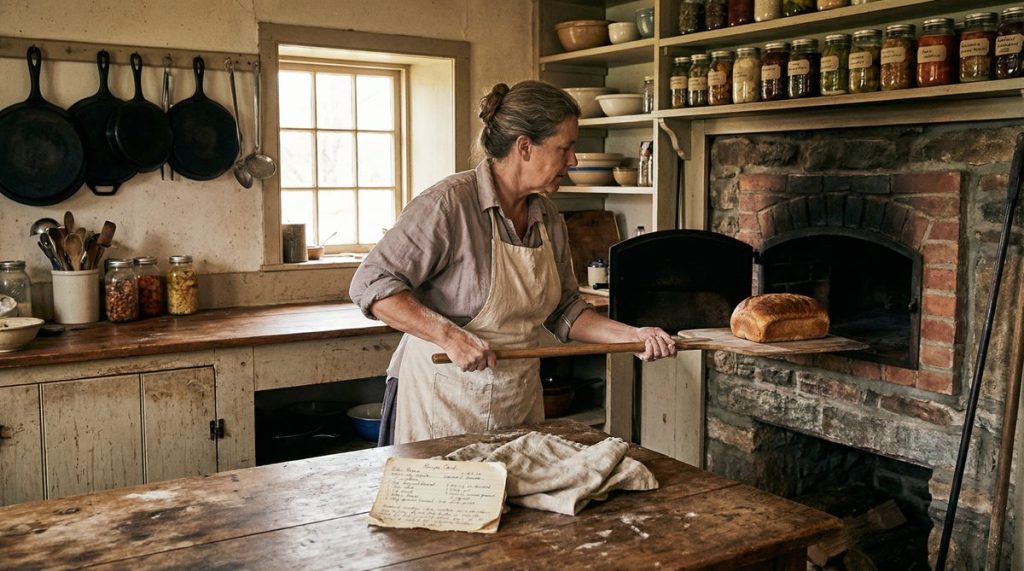
Total cost per loaf: approximately $0.46. That is a 90% savings over the store price — and your bread will taste better, contain no preservatives, and take about 15 minutes of active work.
The action step here is not complicated. Buy a 50-pound bag of flour from a restaurant supply store or warehouse club. Buy a pound of bulk yeast. Learn one basic bread recipe. That is it. You have just eliminated one of your biggest recurring grocery expenses.
Once you are comfortable with basic bread, you can move into sourdough — which requires no purchased yeast at all, just flour and water — and you have effectively removed that cost from your budget permanently.
2. Home Canning: Turn Garden Vegetables Into Shelf-Stable Food for Pennies
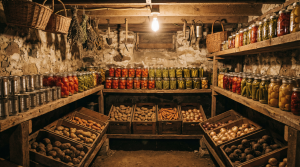
Home canning is the single highest-leverage food preservation skill you can learn. A jar of store-bought canned tomatoes costs $2.50 to $4.50 depending on the brand. A jar of home-canned tomatoes from your garden costs roughly $0.30 to $0.50 in supplies — and that is before you account for the fact that you grew the tomatoes yourself.
The startup cost for home canning is real, but it is a one-time investment that pays for itself in the first season.
| Item | Estimated Cost | Notes |
|---|---|---|
| Presto 23-quart pressure canner | $100–$120 | One-time purchase, lasts decades |
| Wide-mouth mason jars (12-pack, quart) | $15–$18 | Reusable indefinitely |
| Replacement lids (12-pack) | $3–$5 | Replace each use |
| Jar lifter and canning funnel set | $12–$15 | One-time purchase |
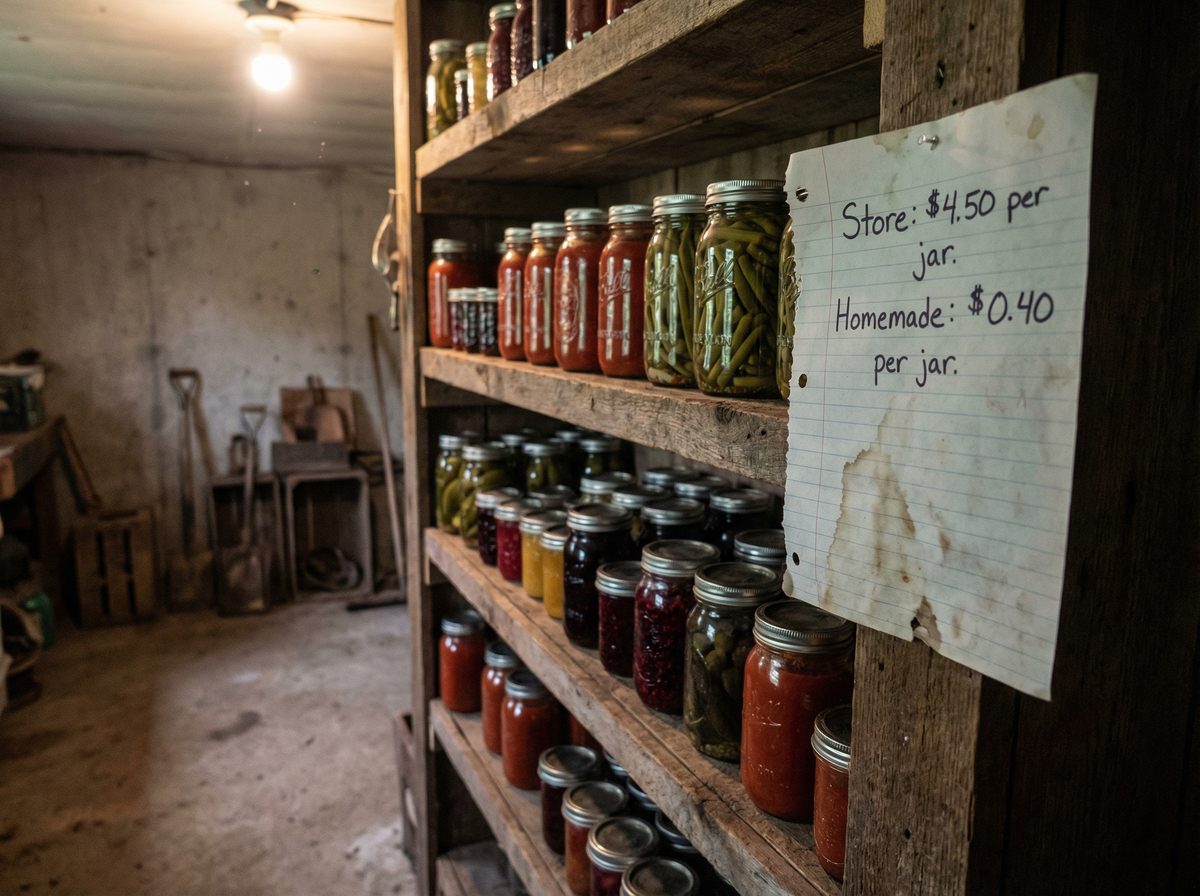
The Action Step: Start with water-bath canning before moving to pressure canning. Water-bath canning is safe for high-acid foods: tomatoes, pickles, jams, and fruit. You do not need a pressure canner for these. A large stockpot with a rack on the bottom works fine. Pick up a copy of the Ball Blue Book of Canning — it is the definitive guide and costs about $10.
If you have a garden, can everything you cannot eat fresh. If you do not have a garden yet, buy produce in bulk when it is in season and cheap at farmers markets or produce auctions. A 25-pound box of tomatoes at peak season costs $10 to $15. Canned, that becomes 15 to 20 quart jars of tomatoes worth $40 to $90 at store prices.
That is the math of home production. You are not just saving money — you are building a pantry that insulates you from price shocks and supply disruptions.
3. DIY Cleaning and Household Supplies: Stop Paying the Brand Tax
The cleaning products aisle is one of the most expensive per-ounce sections of any grocery store. You are paying for plastic packaging, brand marketing, and the illusion that you need a different specialized product for every surface in your home.
You do not. The active ingredients in most household cleaners are simple and cheap: vinegar, baking soda, castile soap, hydrogen peroxide, and essential oils. With these five ingredients, you can make every cleaning product your household needs.
| Product | Store Price | Homemade Cost | Savings |
|---|---|---|---|
| All-purpose cleaner (32 oz) | $4.50 | $0.25 | 94% |
| Glass cleaner (32 oz) | $3.50 | $0.15 | 96% |
| Laundry detergent (64 loads) | $18.00 | $2.50 | 86% |
| Dish soap (16 oz) | $3.00 | $0.80 | 73% |
The Action Step: Start with the simplest recipe: equal parts white vinegar and water in a spray bottle. Add 10 drops of tea tree oil or lavender essential oil. That is your all-purpose cleaner. It works on countertops, stovetops, bathroom surfaces, and floors. Cost: about $0.25 per bottle.
For laundry detergent, combine one cup of washing soda, one cup of borax, and half a bar of grated castile soap. Use two tablespoons per load. A batch costs about $2.50 and lasts 60 to 80 loads. The store equivalent costs $18 to $25.
Once you make this switch, you will never go back. The products work just as well — often better — and you will never run out because you can make more in five minutes from pantry staples.
4. The One Resource That Cannot Wait: Securing Your Water Supply
Food, cleaning supplies, and bread are important. But there is one resource that sits above all of them in the hierarchy of homestead security: water.
You can survive weeks without food. You have three days without water. And yet, most households — even serious homesteaders — are completely dependent on a municipal water system that is one power outage, one infrastructure failure, or one contamination event away from going down.
When that happens, the store shelves empty within hours. Cases of bottled water sell out before most people even know there is a problem. The people who are prepared are the ones who built their water independence before the crisis, not during it.
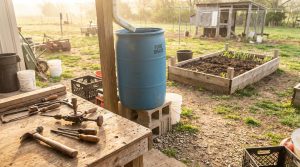
A basic rainwater collection system using two 55-gallon food-grade barrels connected to your downspouts costs about $100 to $150 in materials and can be installed in an afternoon. That gives you 110 gallons of water for garden irrigation and non-potable uses.
| Item | Estimated Cost |
|---|---|
| Food-grade 55-gallon barrel (x2) | $40–$100 |
| Downspout diverter kit | $30–$40 |
| Overflow hose and fittings | $15–$25 |
| Spigot and first-flush diverter | $20–$30 |
But for a truly independent, grid-free water supply — one that generates clean, drinkable water on demand — you need to think beyond rain barrels. There are proven systems that can produce up to 40 gallons of clean water per day from the atmosphere, completely independent of wells, pipes, or municipal infrastructure.
Noah did not wait for the rain to build the ark. He built it when the skies were clear. Your water provision needs to be in place before you need it — not the day the tap runs dry.
If you want to learn about the system that can generate up to 40 gallons of clean water per day — completely off-grid and independent of any municipal supply — click here to see how it works.
The Bottom Line: Start Making, Stop Buying
The system is not going to get cheaper. The tariffs are not going away. The supply chains are not going to get more reliable. The grocery prices are not going back to 2019 levels.
But every skill you build, every jar you fill, every loaf you bake, and every gallon of water you secure is a direct reduction in your dependence on that system. You are not just saving money — you are building resilience that no price hike can take away from you.
Start with one thing today. Bake a loaf of bread. Make a batch of all-purpose cleaner. Set up a rain barrel. Learn to can one vegetable.
The goal is not perfection. The goal is progress. Every step you take toward home production is a step away from the rising cost of depending on someone else to provide for your family.
You can make it. You just have to start.