The Achaemenid Persian Empire was once the largest and most powerful empire in human history. At its peak, it controlled the ancient equivalent of the Strait of Hormuz and dominated global trade. The citizens of the empire enjoyed the fruits of a massive, interconnected economy.
But the empire had a fatal flaw: it could not stop expanding.
When King Xerxes launched ruinously expensive military campaigns thousands of miles from home, he drained the imperial treasury. To fund the endless wars, the empire crushed its own citizens with taxes. The supply chains that brought food and goods across the empire began to break down. The Achaemenid Empire did not fall because Alexander the Great was invincible. It collapsed because it was already rotting from within, bankrupted by military overextension.
America is repeating this exact pattern right now.
The Strait of Hormuz has been effectively closed since late February 2026 due to the US-Iran war. Crude oil is near $120 a barrel. US jet fuel is up 95%. Gas is above $6 in parts of the country. The US is burning $1 billion a day on military operations while drowning in $39 trillion of national debt. A new 15% global blanket tariff is driving up the cost of everything. Walmart and Home Depot are warning consumers of massive price shocks.
When an empire overextends, the homeland suffers. The supply chains you rely on for food, tools, and basic goods are breaking under the weight of inflation and global conflict.
The Persian citizens who survived the empire’s collapse didn’t wait for the king to fix things. They built local skills, local trade, and local resilience. Real wealth is what you can produce, build, and repair — not what a bankrupt empire promises.
Here is how you can build your own sovereign household economy today.
1. Decentralized Food Production: Grow Your Own Calories
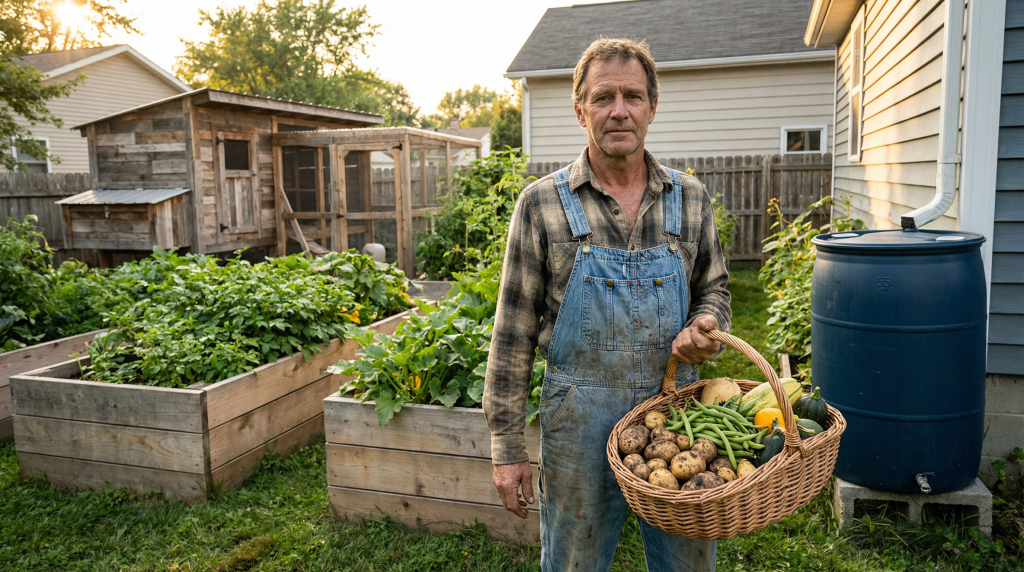
When fuel prices skyrocket, the cost of transporting food across the country explodes. You cannot rely on a grocery store that depends on $120-a-barrel oil to stock its shelves. You must produce calories at home.
You do not need hundreds of acres to start. A small, intensive garden can produce a massive amount of food if managed correctly.
| Item | Estimated Cost |
|---|---|
| Lumber for two 4×8 raised beds | $60–$80 |
| Quality soil and compost mix | $100 |
| Heirloom seeds (tomatoes, beans, squash) | $20 |
The Action Step: Build two raised beds this weekend. Fill them with a mix of topsoil and compost. Plant high-calorie, easy-to-grow crops like potatoes, beans, and squash. Every vegetable you pull from your yard is a vegetable you did not have to buy at an inflated price. If you want to maximize your yield in a small space, check out the 4ft Farm Blueprint for a proven system.
2. Tool Maintenance and Repair: Stop Buying Replacements
In a cheap-energy economy, it is easy to throw away a broken tool and buy a new one. In an overextended, high-tariff economy, replacing tools becomes a luxury you cannot afford.
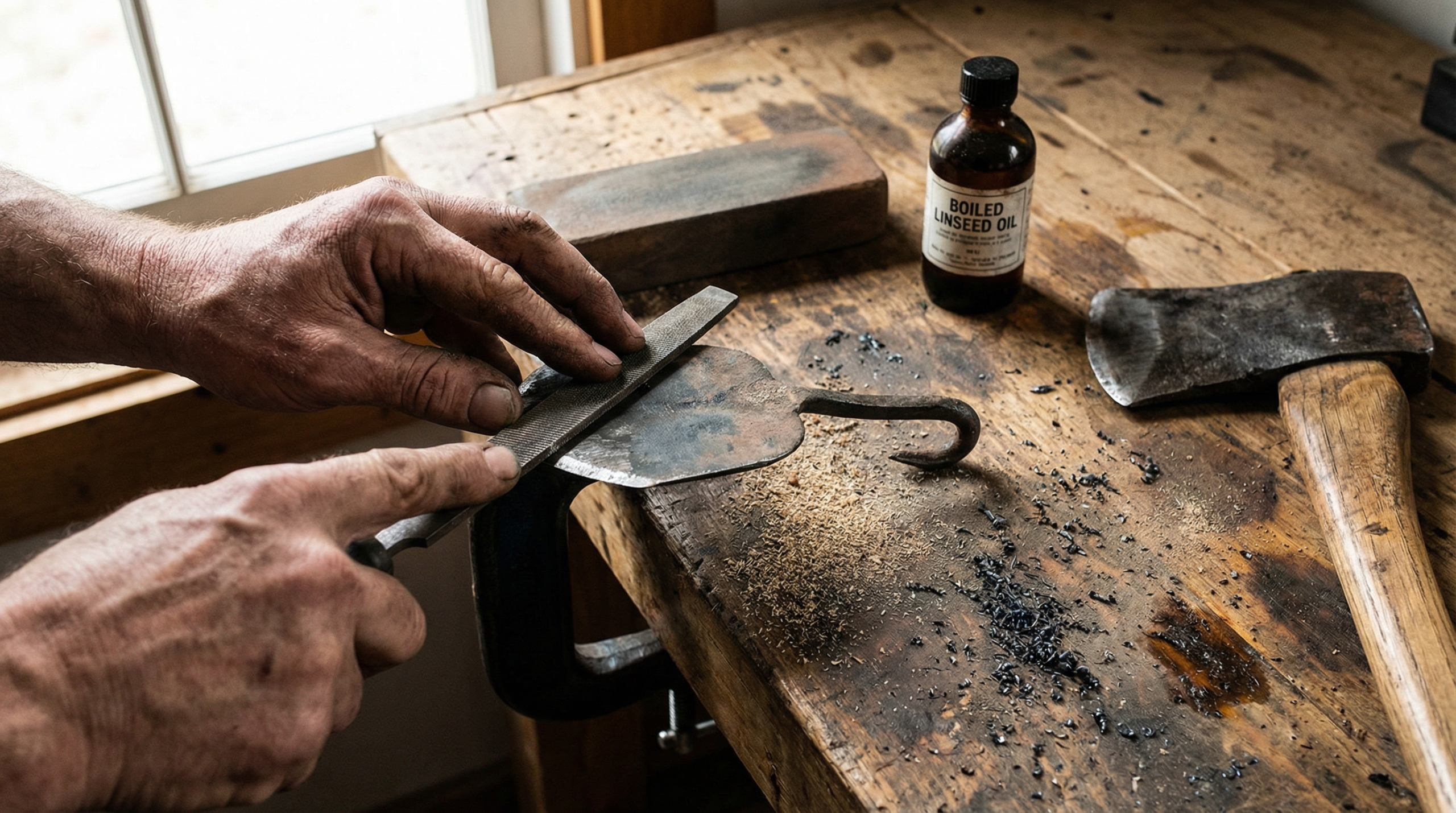
The ability to repair what you own is a core homesteading skill. A sharp, well-maintained tool will last a lifetime. A dull, rusted tool is dangerous and useless.
| Item | Estimated Cost |
|---|---|
| Mill bastard file (for sharpening axes and hoes) | $15 |
| Whetstone or sharpening puck (for knives) | $25 |
| Boiled linseed oil (for treating wooden handles) | $10 |
The Action Step: Gather all your bladed tools — axes, hoes, shovels, and knives. Clean off the rust with wire wool. Use a file or whetstone to restore the edge. Rub boiled linseed oil into the wooden handles to prevent cracking. You just saved hundreds of dollars in replacement costs and secured your ability to work your land.
3. Rainwater and Greywater Systems: Secure Your Supply
Water is the engine of your homestead. If the municipal supply is disrupted by power outages or infrastructure failures, your garden and livestock will suffer immediately.
You must build a buffer between your property and the fragile public utility system.
| Item | Estimated Cost |
|---|---|
| Food-grade 55-gallon barrel | $20–$50 |
| Downspout diverter kit | $30–$40 |
| 3-way diverter valve for washing machine | $40 |
The Action Step: Install a simple rain barrel on your main gutter downspout. Next, route your washing machine drain to a “laundry-to-landscape” greywater system. You are now capturing free water from the sky and recycling the water you already paid for to keep your food supply alive.
4. Local Trade and Barter: Build Your Network
The Achaemenid survivors did not survive alone. They survived by trading value with their neighbors. When the imperial currency loses its purchasing power, local barter becomes the true economy.
You need to produce something of value that your neighbors want. This could be eggs, honey, surplus vegetables, or a specific skill like carpentry or small engine repair.
| Item | Estimated Cost |
|---|---|
| Basic chicken coop materials | $150–$300 |
| 4–6 laying hens | $20–$30 each |
| Feed and waterers | $40 |
The Action Step: Identify one surplus item you can produce this month. If you have space, start a small flock of laying hens. Fresh eggs are one of the most valuable barter items in any local economy. Trade your surplus eggs for things you cannot produce yourself.
The Bottom Line: Build Your Sovereign Economy
The Achaemenid Empire collapsed because it drained its wealth fighting foreign wars while neglecting its own people. The American system is showing the exact same cracks.
Do not wait for the supply chains to break completely. Start building your household economy today. Grow your own food. Repair your own tools. Secure your own water. Trade with your neighbors.
Real wealth is what you can produce, build, and repair.
If you want to protect your family’s financial future while you build your physical homestead, you need to understand how the coming crisis will impact your savings. Get your FREE Special Report: How To Survive The Next Financial Crisis and learn how to secure your assets before the system breaks.