For 700 years, the Byzantine nomisma was the most trusted coin in the world — 24-carat gold, a symbol of stability. Then the emperors started cheating, secretly mixing it with worthless copper until it collapsed. Today, the US dollar is being debased in the same way, with trillions printed from thin air. But the lesson isn’t just about money. It’s about what happens when money fails.
When the nomisma became worthless, the Byzantine world didn’t stop. The farmers, the blacksmiths, the tradespeople — they went back to what was real. They relied on their land to grow food, their skills to make tools, and their local communities to barter. They didn’t trust the emperor’s debased coins; they trusted the weight of an axe head, the yield of a field, the quality of their neighbor’s work. That’s the homesteader’s playbook. It’s a thousand years old, and it still works.
Real wealth isn’t a number in a bank account. It’s the land under your feet and the tools in your hands. Here’s how to build it.
Section 1: Secure Your Foundation – The Land
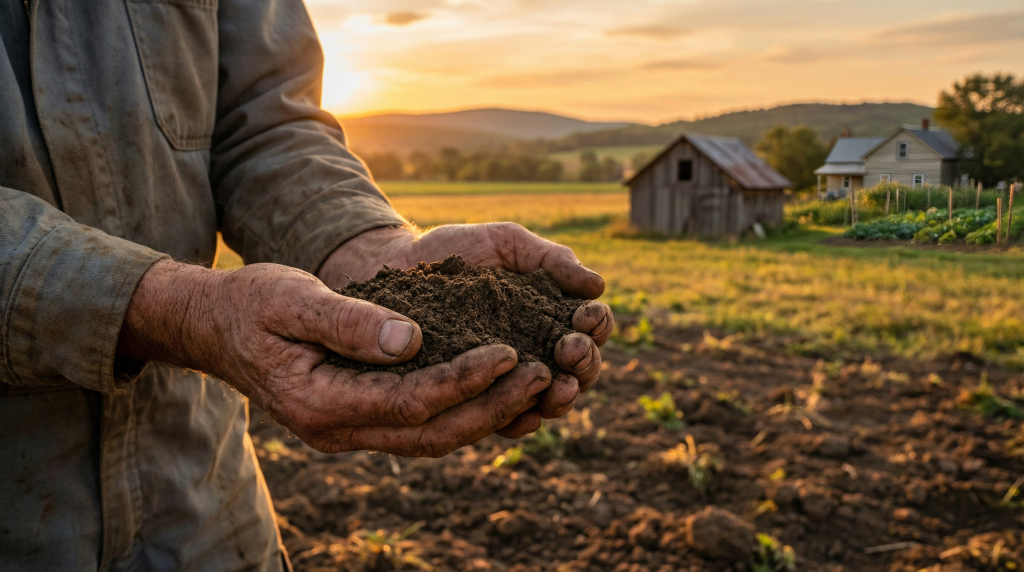
Your homestead is your personal Fort Knox. It’s the one asset that can’t be inflated away or erased in a market crash. But not all land is created equal. The goal is to own productive land, free and clear, that can sustain you and your family.
- Actionable Step: Focus on acquiring rural or semi-rural acreage with key resources. Look for a reliable water source (well, creek, or high water table), good soil, and a mix of open pasture and woodland. A minimum of 5 acres is a good starting point for a family homestead, but even a quarter-acre suburban lot can become a food-producing powerhouse.
- Real Costs: Prices vary wildly by location. In many rural parts of the country, you can still find land for $2,000 – $5,000 per acre. A 10-acre parcel might cost $30,000. Owner financing is often available, allowing you to bypass the banks. Your goal should be to pay it off as quickly as possible.
- Real Tools:
- Land-buying resources: LandWatch, Land And Farm, and local real estate agents specializing in rural properties.
- Soil testing kits: A simple $20 kit from your local extension office can tell you everything you need to know about your soil’s health.
Section 2: Build Your Infrastructure – The Tools
With your land secured, the next step is to acquire the tools that turn that raw land into a productive asset. These are the durable goods that hold their value and increase your homestead’s capabilities, regardless of what the dollar is doing.
- Actionable Step: Prioritize tools that provide for basic needs: food, water, shelter, and energy. This isn’t about fancy gadgets; it’s about durable, multi-purpose equipment that will last for decades.
- Real Costs & Tools:
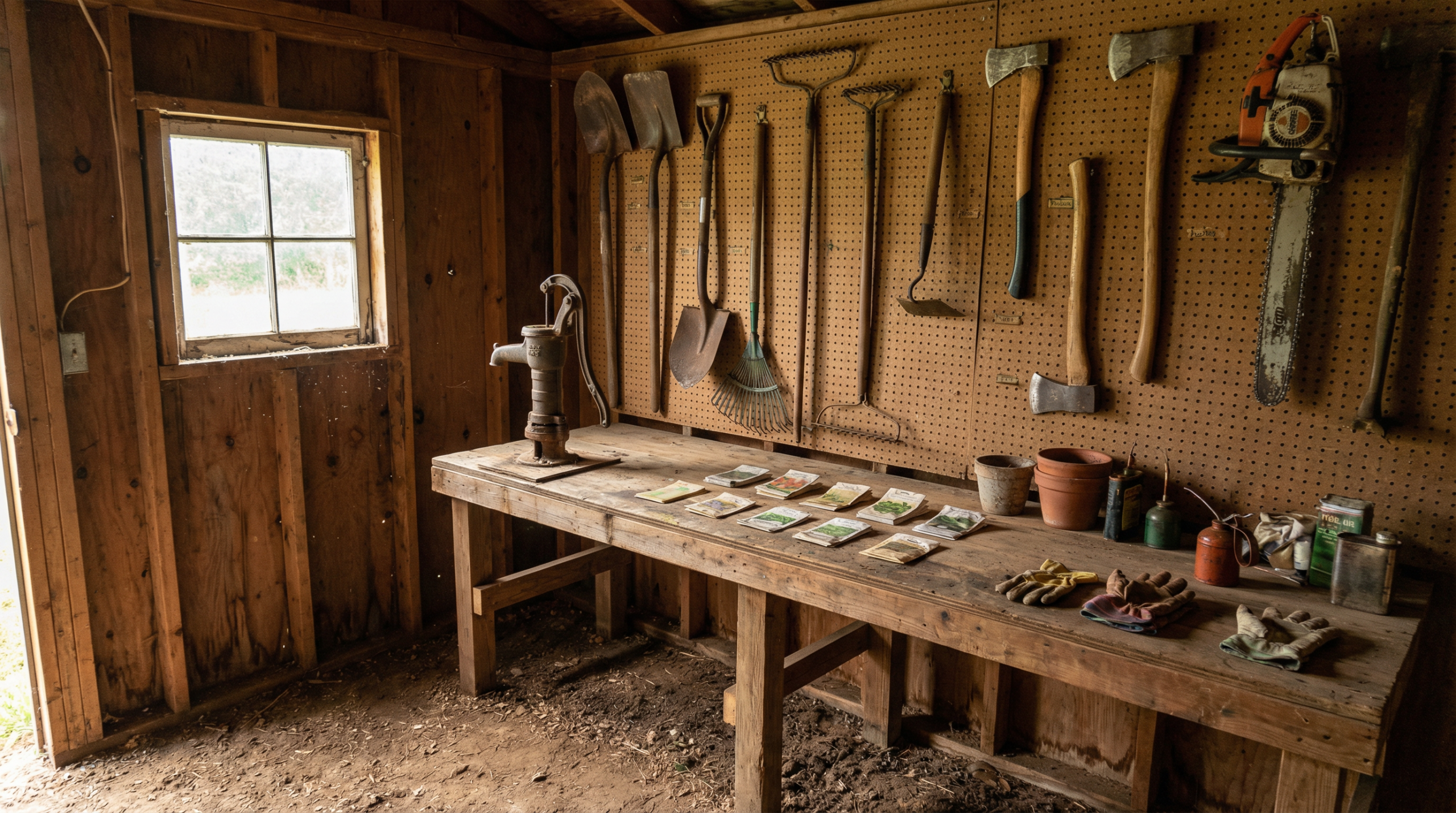
- Food Production: A high-quality garden tiller ($300-$800), a set of durable hand tools (spade, rake, hoe – $100), and a reliable chainsaw ($200-$400).
- Water: A manual well pump ($250) as a backup to an electric one. Rainwater harvesting barrels ($50 each).
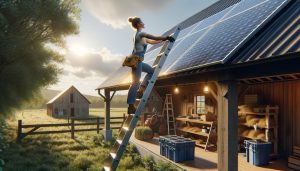
- Energy: A small solar generator and panels ($1,000-$2,000) can power essential devices. Consider a more robust system to reduce or eliminate your reliance on the grid entirely. This ancient invention can wipe out your power bills for good.
Section 3: Invest in Skills – The Ultimate Currency
The most valuable asset on your homestead is you. Your skills are the one thing that can never be taken away. In a world of uncertainty, knowing how to grow your own food, fix your own equipment, and provide for your own needs is the ultimate form of wealth.
- Actionable Step: Dedicate time each week to learning a new homesteading skill. Start with the basics: gardening, food preservation, basic carpentry, and first aid. Then move on to more advanced skills like animal husbandry, welding, or off-grid engineering.
- Real Costs: Many skills can be learned for free or at a very low cost.
- Books and online resources: Your local library and YouTube are treasure troves of information.
- Community: Connect with other homesteaders in your area. Offer to help them with a project in exchange for learning a new skill.
Do This Weekend: The Byzantine Barter Audit
The Byzantine farmers who survived the nomisma collapse didn’t wait until the coins were worthless to figure out what they had to offer. They already knew. They knew their land, their tools, and their skills — and so did their neighbors.
You can do the same thing in about an hour this weekend. It’s called a Barter Audit, and it’s the single most clarifying exercise a new homesteader can do.
Here’s how:
Step 1 — List what you can produce or do right now. Be honest and specific. Not “I could grow vegetables someday” — but “I have 4 raised beds, I’m growing tomatoes and beans, and I’ll have surplus in August.” Other examples: eggs from backyard chickens, firewood, homemade preserves, carpentry skills, mechanical work, childcare, a truck and trailer.
Step 2 — List what you currently buy that you could get locally. Eggs, produce, honey, firewood, meat, repairs. These are your barter opportunities — things your neighbors might already produce.
Step 3 — Find one neighbor or local producer and make one trade. Post in a local Facebook group, Nextdoor, or just knock on a door. Offer a dozen eggs for a jar of honey. Offer to help someone stack firewood in exchange for a bag of their garden seeds. One trade. That’s it.
Why this matters: The Byzantines didn’t build their barter networks after the money failed. The networks already existed because neighbors had been trading skills and goods for years. When the coins became worthless, the relationships were already there. You’re not just building a skill — you’re building the network that makes the skill worth something when it counts.
This is the move that separates a homesteader from a prepper with a stockpile.
Your Ark of Real Assets
The Byzantine emperors thought they could cheat their way to prosperity. They were wrong. Their debased currency led to the collapse of their empire.
Don’t make the same mistake. While the world’s financial systems become increasingly fragile, you can build your own personal economy based on real, tangible assets. Land, tools, skills — and the neighbors who know you have them.
Noah didn’t wait for the rain to start building his ark. Don’t wait for the dollar to completely collapse before you start building yours. Secure your provisions now, and be ready for any storm.