
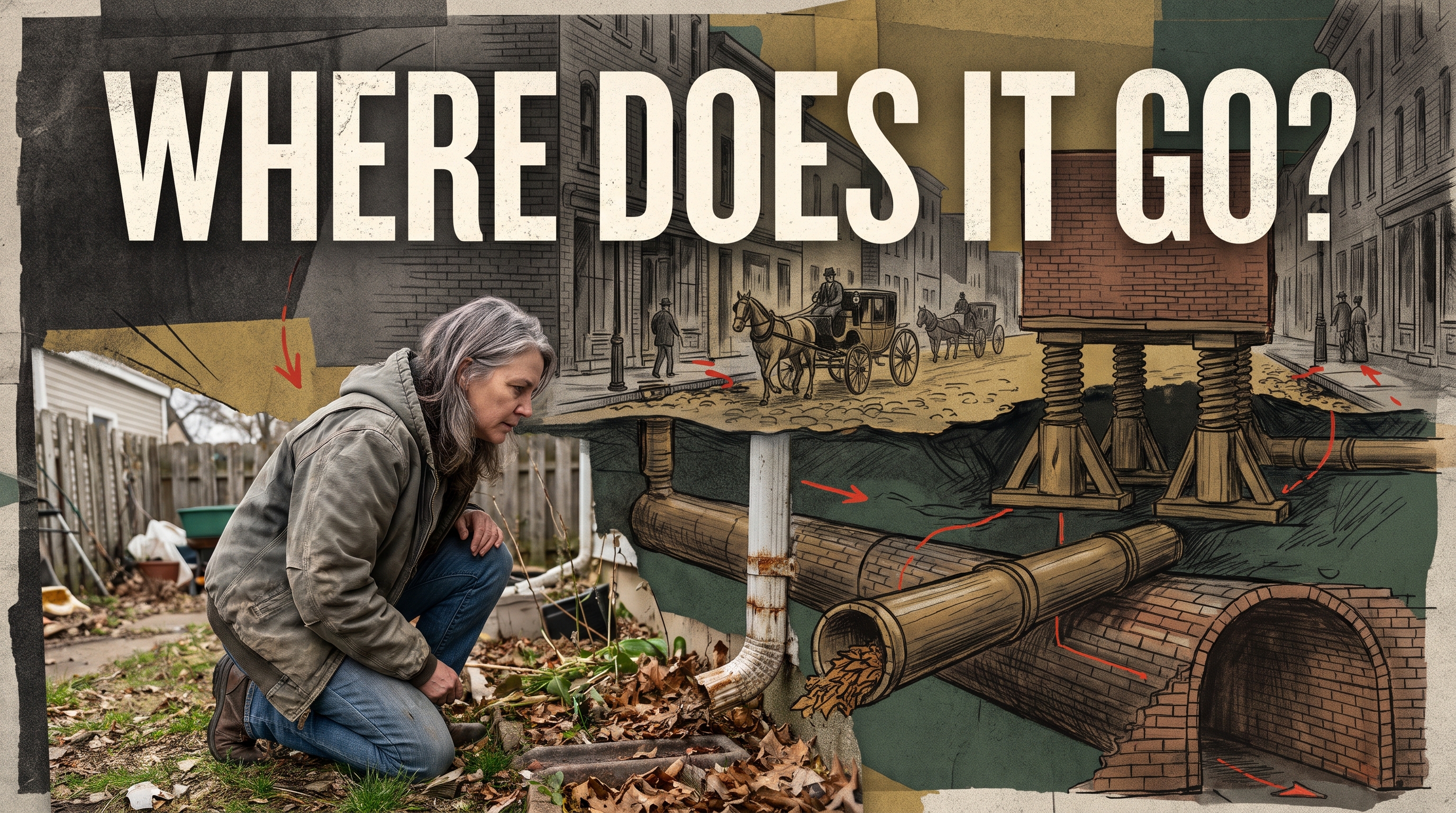
Your Daily Install connects what’s happening now with a useful pattern from the past—and one simple step you can take today to make your household more resilient.
Print the action worksheet below, fill it in, and add it to your Household Resilience Network binder.
What’s happening now?
A rain gutter can look fine from the driveway. Follow the downspout, though. Does the water have somewhere useful to go?
NOAA’s winter outlook favors wetter conditions across much of the South and East. That is a seasonal outlook, not a storm warning for your address. With fall leaves collecting, it is a good cue for a ground-level check.
Getting water off the roof is only half the job. Where it goes next matters, too.
Has this happened before?
In the 1850s, Chicago had a drainage problem built into its setting. The ground was low and flat. Water had little natural fall to carry it away.
Engineer Ellis Chesbrough’s sewer plan needed a slope so water could move by gravity. The city could not solve that simply by adding another pipe at the same level.
So Chicago raised streets. In the late 1850s, many rose by roughly four or five feet. Owners also raised buildings to meet the new street levels—a remarkable job done with lifting screws.
What happened next?
The higher grades made room for the planned drainage and sewer system. The change was not just where a pipe started. It was the path the water could follow afterward.
The pattern: trace the whole route before calling the job done. Your downspout is not Chicago’s sewer project. But an outlet pouring toward the house has the same basic flaw: the next part of the path still needs attention.
Before you buy more backup gear…
The lights fail. Your backup plan suddenly feels small. A veteran’s battery-backup guide takes a different route. What is it?
Tap Here to See the Battery-Backup Idea →What can I do?
Take a 10-minute walk on dry ground. Start at one downspout and follow its visible outlet. Look for loose parts, leaves at ground level and signs of pooling near the house.
Remove only easy loose debris you can reach safely from the ground. Photograph a blocked or poorly aimed outlet. Ask the landlord or a qualified helper about a fix that suits the site and local rules.
Do not climb a ladder, enter a drain or redirect water onto a neighbor’s property. During a storm, stay out of moving water. Today’s win is a known route and one small fix—or a clear repair request.
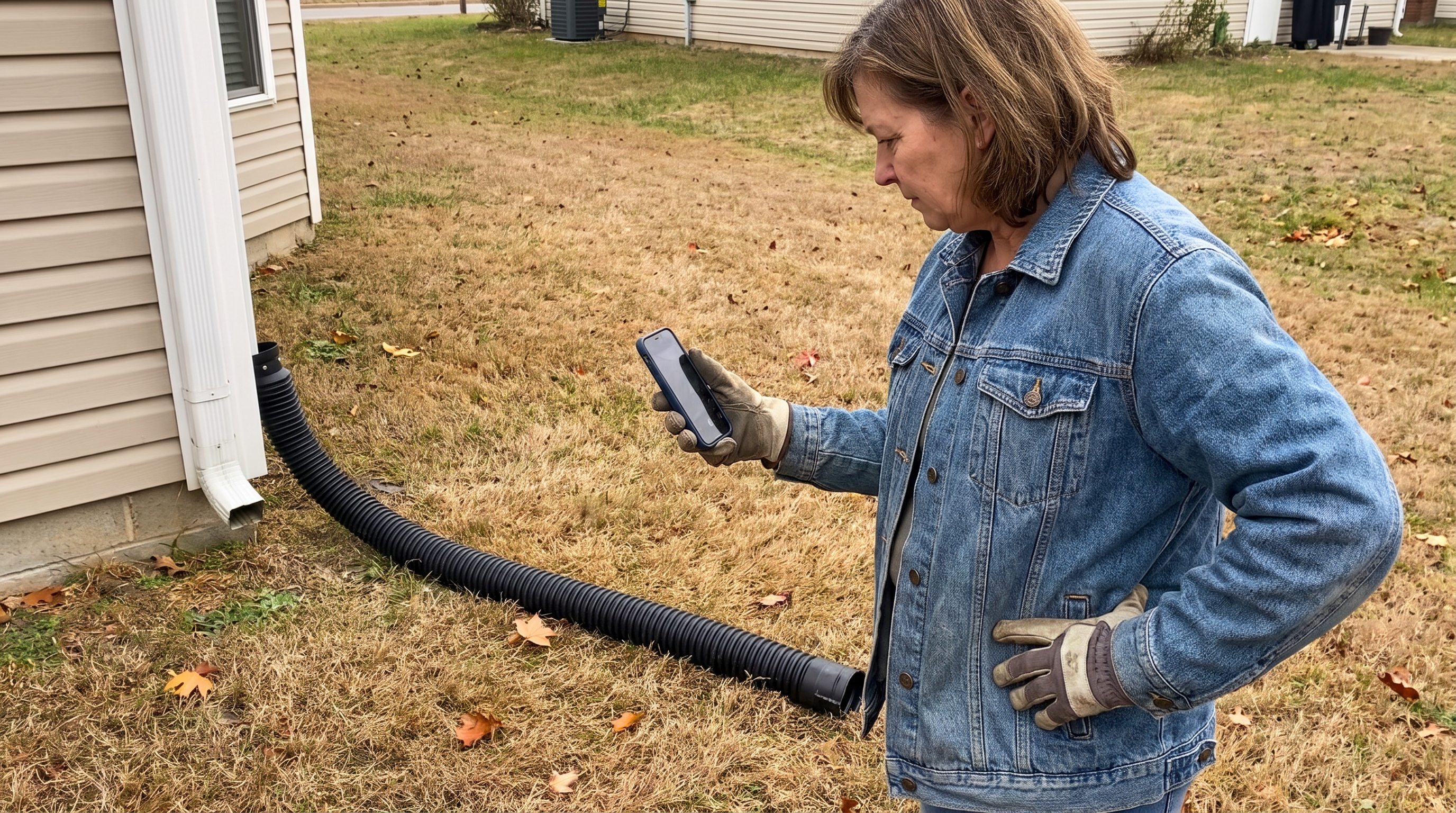
Illustrative household example. Use the worksheet for your own details.
My Rainwater Route
Date: __________ File under: Home Maintenance
1. Pick one outlet
Side of home:
Downspout location:
Date / dry conditions checked:
2. Trace the next step
Water appears to flow toward:
☐ Away from home ☐ Toward home ☐ Unsure
☐ Ground-level debris ☐ Loose part ☐ Pooling mark
3. Finish one task
☐ Easy debris removed from ground
☐ Photo taken ☐ Landlord / helper contacted
Requested fix:
4. Check again
After-rain view from a safe spot:
Person / date for follow-up:
Today’s win: One downspout route is checked, with one safe fix completed or a repair request ready.
Stop buying every bite from someone else.

You buy the same fresh foods again and again. Then another grocery run takes another bite from the budget.
Put one small part of that food supply at home. The COMPLETE Blueprint shows the steps in pictures, with small-space and indoor options.
Which foods let you pick a little and leave more growing? Tap below for the simple starting point.
| Tap Here to See the COMPLETE Blueprint → |
Stay steady,
Ethan Archer
Homesteader Depot
P.S. Have you found a downspout that sends water right back toward the house? Hit reply with what you noticed. Share this with the person who handles your home’s small fixes.
P.P.S. One useful next read from the Household Resilience Network: Stronghold Install: When the Power Problem Becomes a Water Problem.