
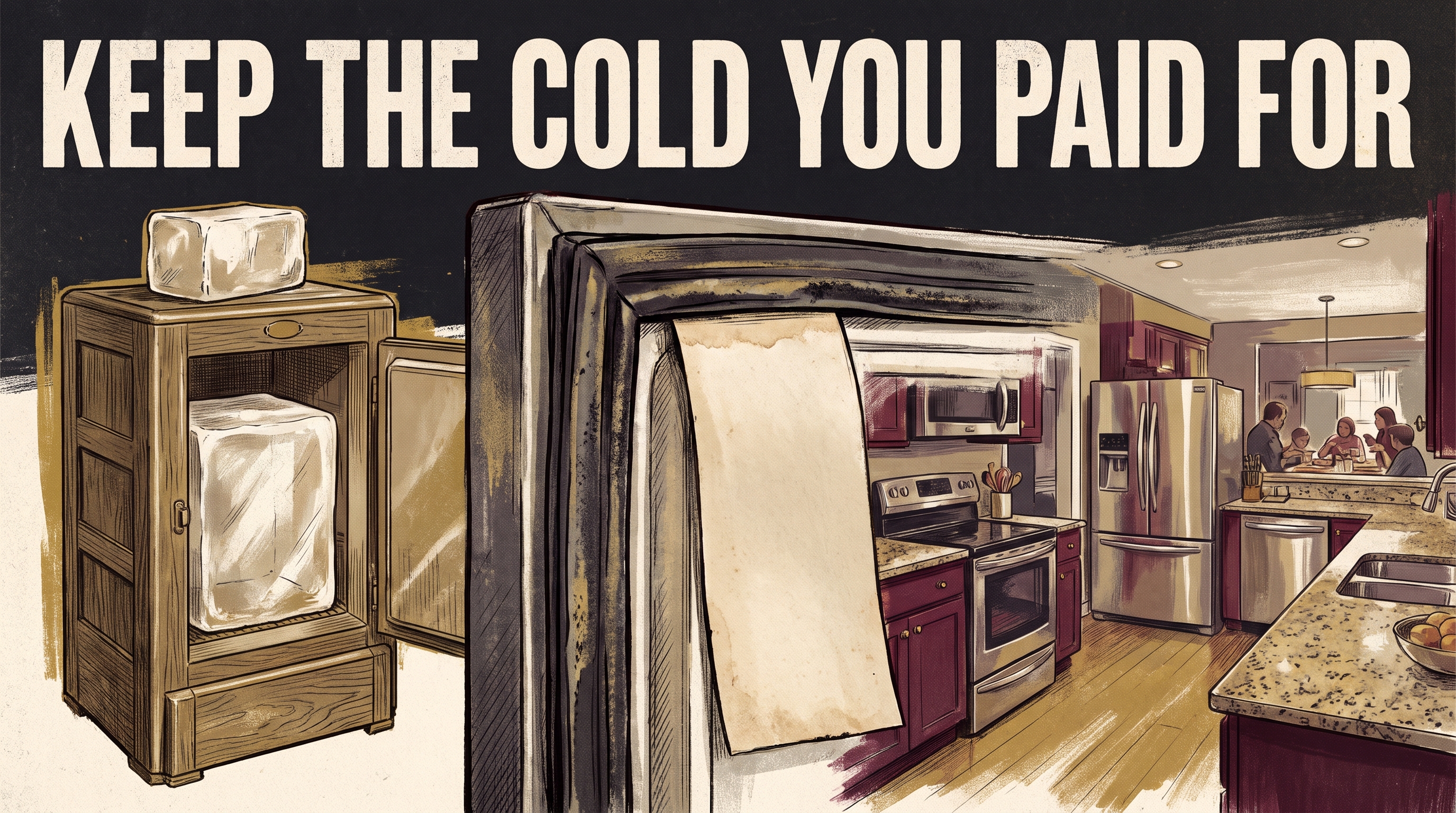
Your Daily Install connects what’s happening now with a useful pattern from the past—and one simple step you can take today to make your household more resilient.
Print the action worksheet below, fill it in, and add it to your Household Resilience Network binder.
What’s happening now?
You shut the fridge. The light goes off. From the outside, the job looks done. A worn door seal can tell a different story.
Tomorrow is Weatherization Day, October 30. Looking for energy waste does not have to stop at the front door. The fridge is working through warm weather and cold weather alike—and the Department of Energy recommends a simple paper check for its seals.
Spend 10 minutes checking the cold you already paid for.
Has this happened before?
Before electric refrigerators spread, keeping food cool often meant bringing a block of ice into the kitchen. An icebox held that cold for as long as it could. The ice still melted.
In the 1930s, more American families began switching to electric refrigerators. Smithsonian collections show how manufacturers taught people to store leftovers and use the new space. Loans starting in 1935 helped more households make the change.
The daily job changed. Families depended less on the next ice delivery. A machine could keep cooling—but it needed electricity and a box that held the cold in.
The new tool removed one chore. It did not remove the need to look after the system.
What happened next?
Refrigeration gave households more time to use many foods. Keeping the door closed and the seal in good shape remains part of making that tool work well.
Check the small part before replacing the big one. A weak seal gives cold air a way out. The paper check helps you spot where to look closer before paying for a repair or a new fridge.
Why is your dog’s food always brown?
Same scoop. Same brown pieces. Every day. You check the food you buy for yourself—but what is in that bag for the dog? This video starts with the color of ordinary kibble. The answer leads into the daily blend behind UltraK9 Pro.
Tap Here to Watch the Dog-Food Video →What can I do?
Use a clean strip of ordinary paper. Close the fridge door over it so half is inside and half is outside. Gently pull. Check a few spots around the door. Keep each opening brief.
If it slips out very easily at one spot, look for dirt, damage or something inside stopping the door from closing. Clean the gasket as the maker directs and check again. Do not force the hinge or take the appliance apart.
Write down a weak spot to ask about. Use an appliance thermometer to keep the fridge at 40°F or below. A loose seal, poor temperature or ongoing problem deserves the right repair advice—not an automatic new-fridge purchase.
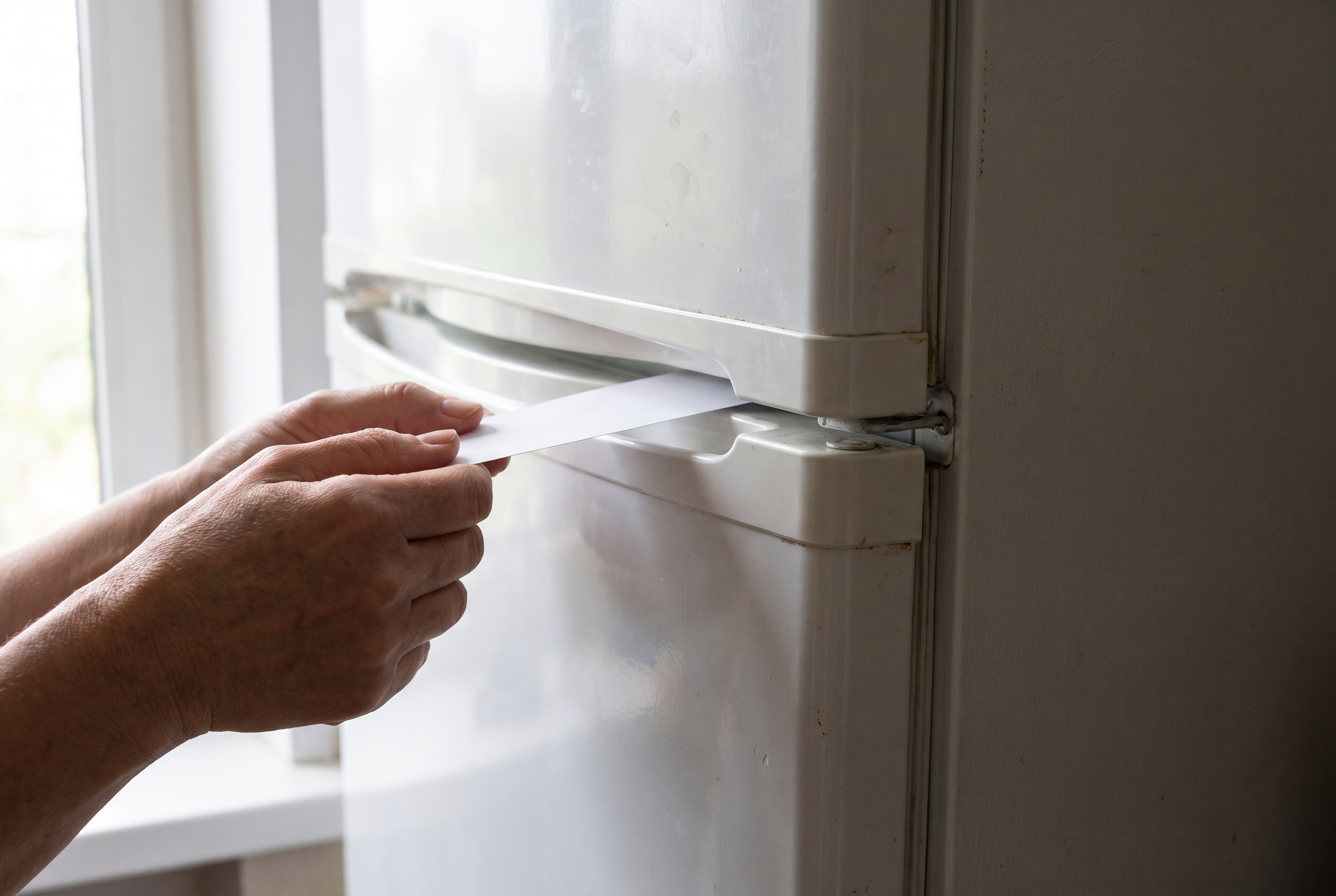
Illustrative household example. Use the worksheet for your own details.
My Fridge-Door Check
Date: __________ File under: Home Upkeep
Check before buying
Door / weak spot:
☐ Seal clean ☐ Food clear of door ☐ Damage seen
Fridge thermometer reading:
Follow through
Question for maker or repairer:
Next check / date:
☐ No hinge work or appliance disassembly.
Today’s win: One cold-storage door has been checked, with a specific next step if the seal seems weak.
You do not need a homestead to grow food.
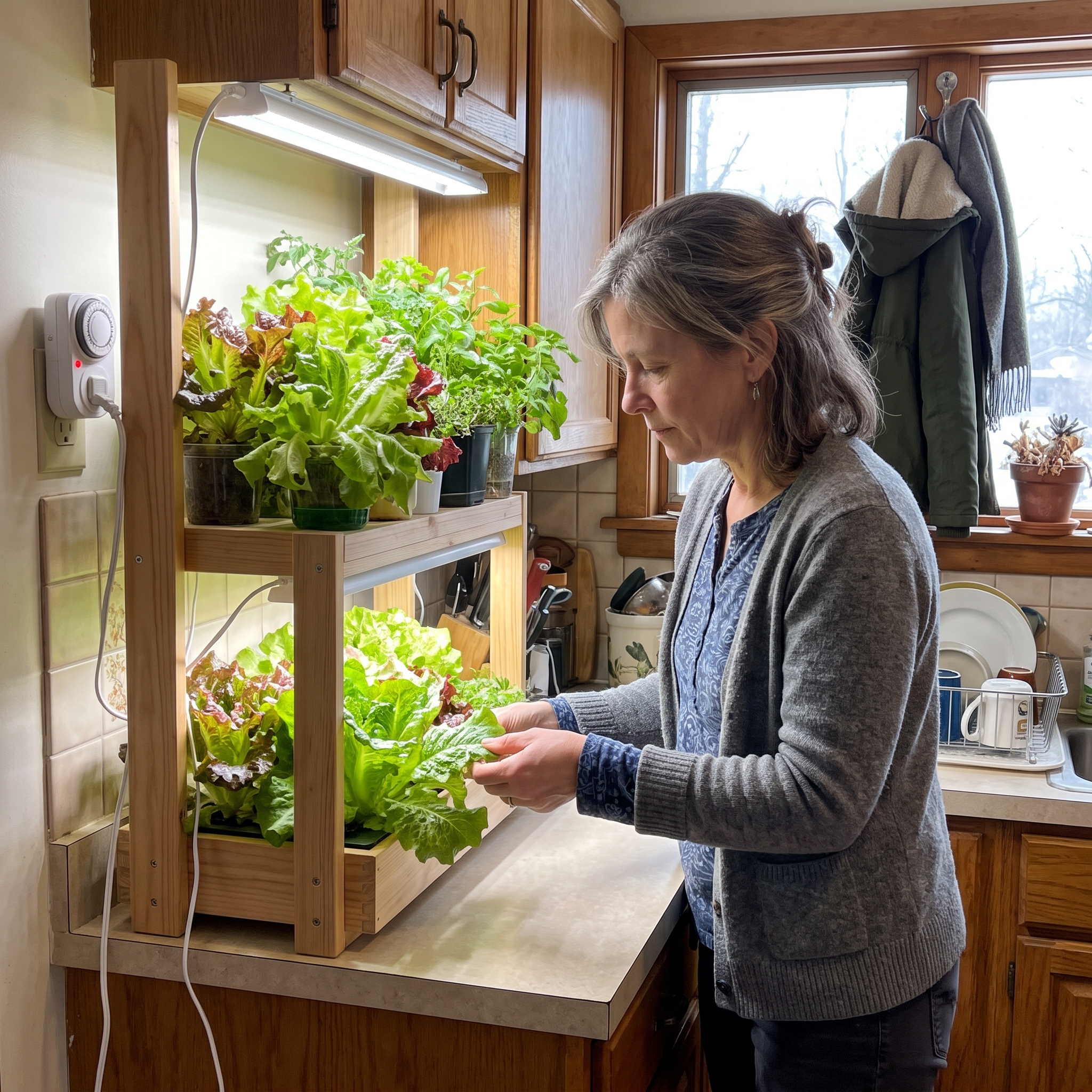
A little space at home could do more than hold another unused chair or empty pot.
Put a food you buy often in that spot instead. The COMPLETE Blueprint shows the growing steps in pictures, with patio, small-space and indoor options.
See where you could start—without turning it into a big project.
| Tap Here to See the COMPLETE Blueprint → |
Stay steady,
Ethan Archer
Homesteader Depot
P.S. How old is your fridge? Hit reply with your best guess. Share this with someone who would rather check the small part before replacing the big one.
P.P.S. Before another takeout order, see what you could make from the food already in your kitchen. The Household Playbook includes restaurant-style meals and ways to use more of the food you buy. Click Here to Look Inside the Household Playbook →