
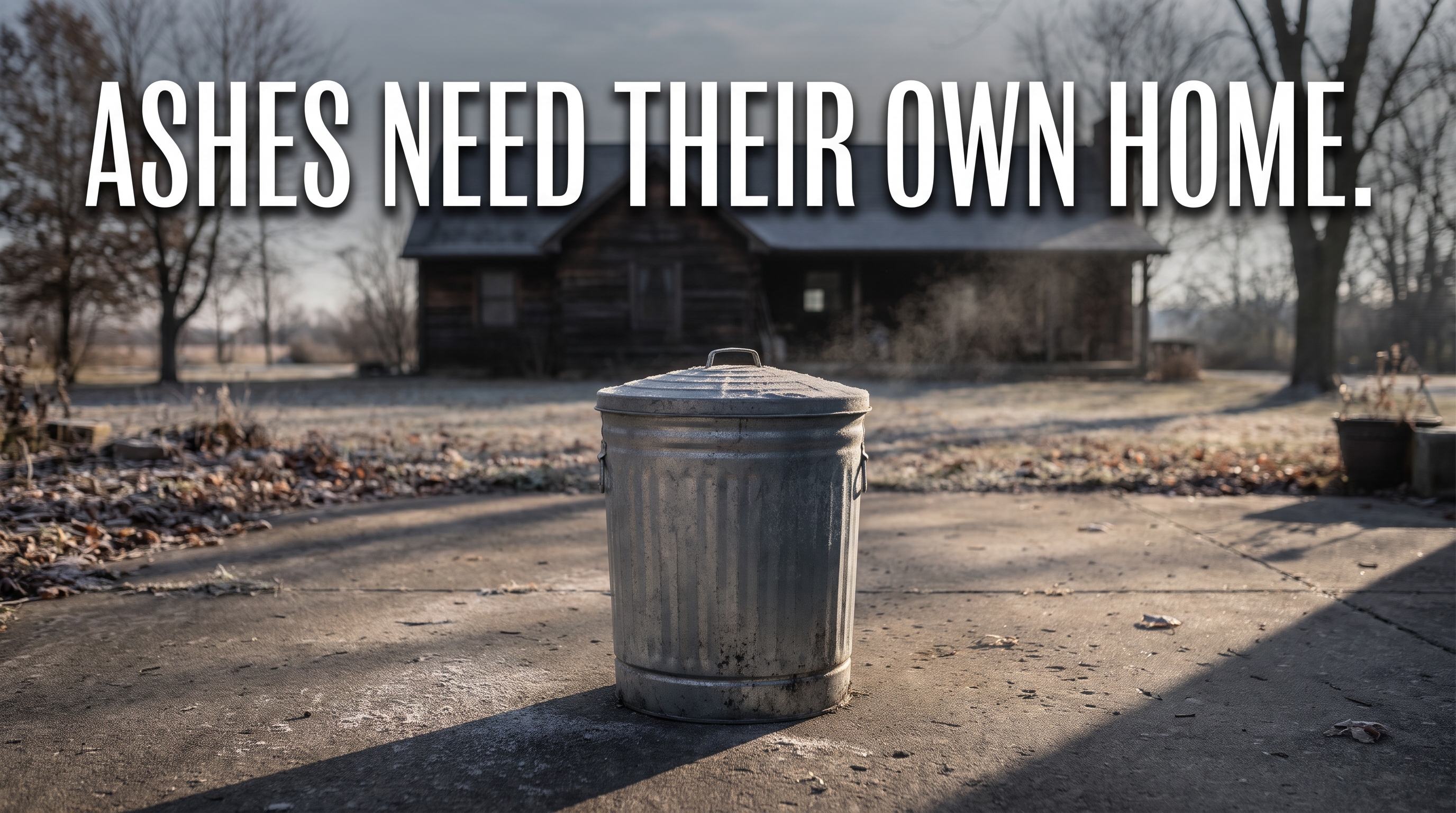
The fire is over. The hearth looks quiet. Then someone reaches for a cardboard box or carries the ash pail onto the wooden porch.
The last step of a fire needs a plan just as much as lighting it does.
SPONSORED · 4 FOOT FARM BLUEPRINT
Could your winter food project fit indoors?
You do not need to wait for a large outdoor garden. The COMPLETE 4 Foot Farm Blueprint includes indoor and small-space options with picture-led steps. See the Modern Victory Garden and choose one food your household already eats.
| TAP Here for the COMPLETE Blueprint → |
Tonight’s Install
One useful change for the home you already have. Print the worksheet below and add it to your Household Resilience Network binder.
ACTION BRIEF
Time: 12 minutes
Do: Choose an ash-only metal container and a safe outdoor location.
Win: a lid fits, and the location is at least ten feet from the home on a noncombustible surface.
What’s happening now?
Missouri’s Winter Weather Preparedness Week runs November 2–6. Before more fireplaces and wood stoves come back into use, check the ash routine. The U.S.
Fire Administration says to use a metal container with a lid and put it outside at least ten feet from the home. Today’s job is choosing that empty container and spot, not handling hot ashes.
What did Franklin’s fire company inspect?
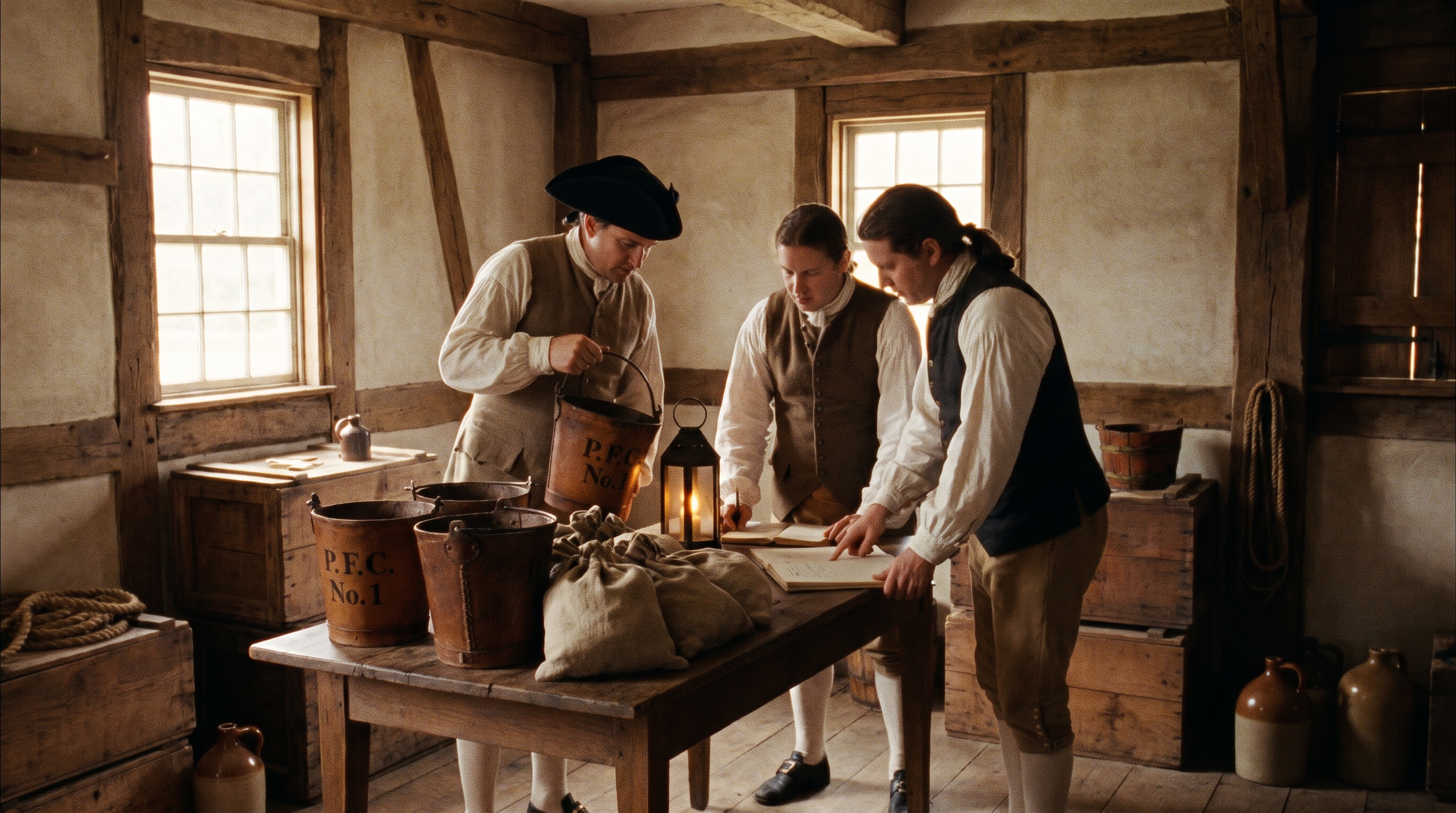
Illustrative historical reconstruction.
On December 7, 1736, a group in Philadelphia put a fire plan into writing. Benjamin Franklin’s Union Fire Company did not merely agree that fire was dangerous. Its members listed the equipment each person had to keep.
The articles called for two leather buckets and four linen bags per member. The equipment carried identifying marks. It was reserved for fire use.
A missing bucket or bag brought a fine.
There was another useful detail: the clerk had to inspect the equipment and report at monthly meetings. A promise made once was not treated as proof that the equipment would still be ready later.
The bags were meant to help protect belongings. The buckets were part of a very different era of firefighting. This is not a reason to fight a modern house fire yourself.
If a fire threatens the home, get out, stay out, and call emergency services.
The historical lesson is about preparation before an event. The company gave objects a specific job, checked that they were present, and made someone responsible for noticing when they were not.
Now look at the last step of your fireplace routine. Is there a dedicated metal ash container? Does its lid fit? Does everyone know where it belongs outside?
A random container found in a hurry is not the same as equipment chosen for the job. The choice can be made while the hearth is completely cold and nobody is rushing.
That is tonight’s useful piece of the old fire-company habit: inspect a simple part of the plan before you need to carry it out. Readiness should be visible, not assumed.
What remains of an old Roman fire station?
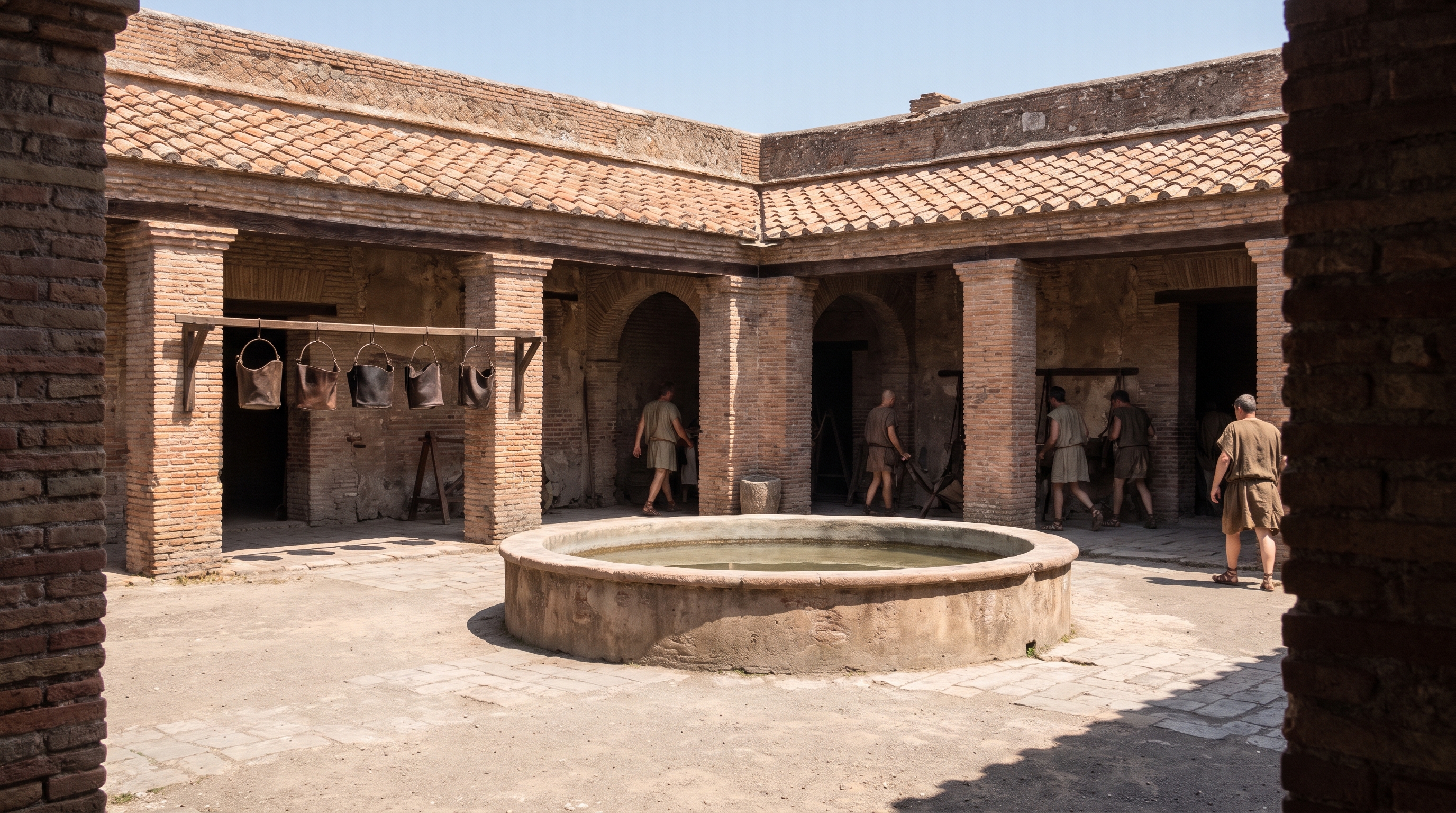
Illustrative historical reconstruction.
At Ostia, the port city near Rome, archaeologists uncovered the barracks of a fire brigade. The building visible today was largely built around AD 132–137, near the end of Hadrian’s reign. Its brick rooms surrounded a large courtyard.
In two corners were unusual basins. Researchers suggest they may have been used in practice with pumps and bucket chains. A grooved threshold in another room may indicate a wheeled vehicle, possibly carrying a pump.
Those interpretations are possibilities, not things the ruins prove beyond doubt.
Even with that caution, the site tells us something concrete. Fire response had a place in the city. The building had rooms, access routes, water features, and space associated with the brigade’s work.
This was more than a loose idea that someone would help.
We cannot copy an ancient fire station into a modern house. The fuels, buildings, tools, and safety rules are different. Nor should we assume every basin had the purpose we find most appealing.
The useful comparison is that a task needs a prepared place. Tools stored anywhere are harder to find. An unclear handoff leaves someone to improvise.
A dedicated location makes the next step easier to repeat.
For fireplace ashes, your prepared place is much smaller: an appropriate closed metal container and a safe outdoor location away from the home and things that can burn.
Do that planning when the container is empty. You can measure the distance and clear the surface without carrying hot material.
The Roman courtyard is a reminder to give preparation physical space. Your ash routine should have a clear destination before the first fire of the season leaves anything behind.
SPONSORED · Foraging Secrets
You pulled it up. Someone else saw food.
That little yellow flower looks like another weed to clear. Someone who knows wild plants sees something different. Follow the clue into a forgotten food skill.
| PRESS Here for the Yellow-Flower Story → |
THE PATTERN TO KEEP
Across BOTH examples, fire preparation depended on dedicated equipment, a known place, and a check before trouble.
What can I do tonight?
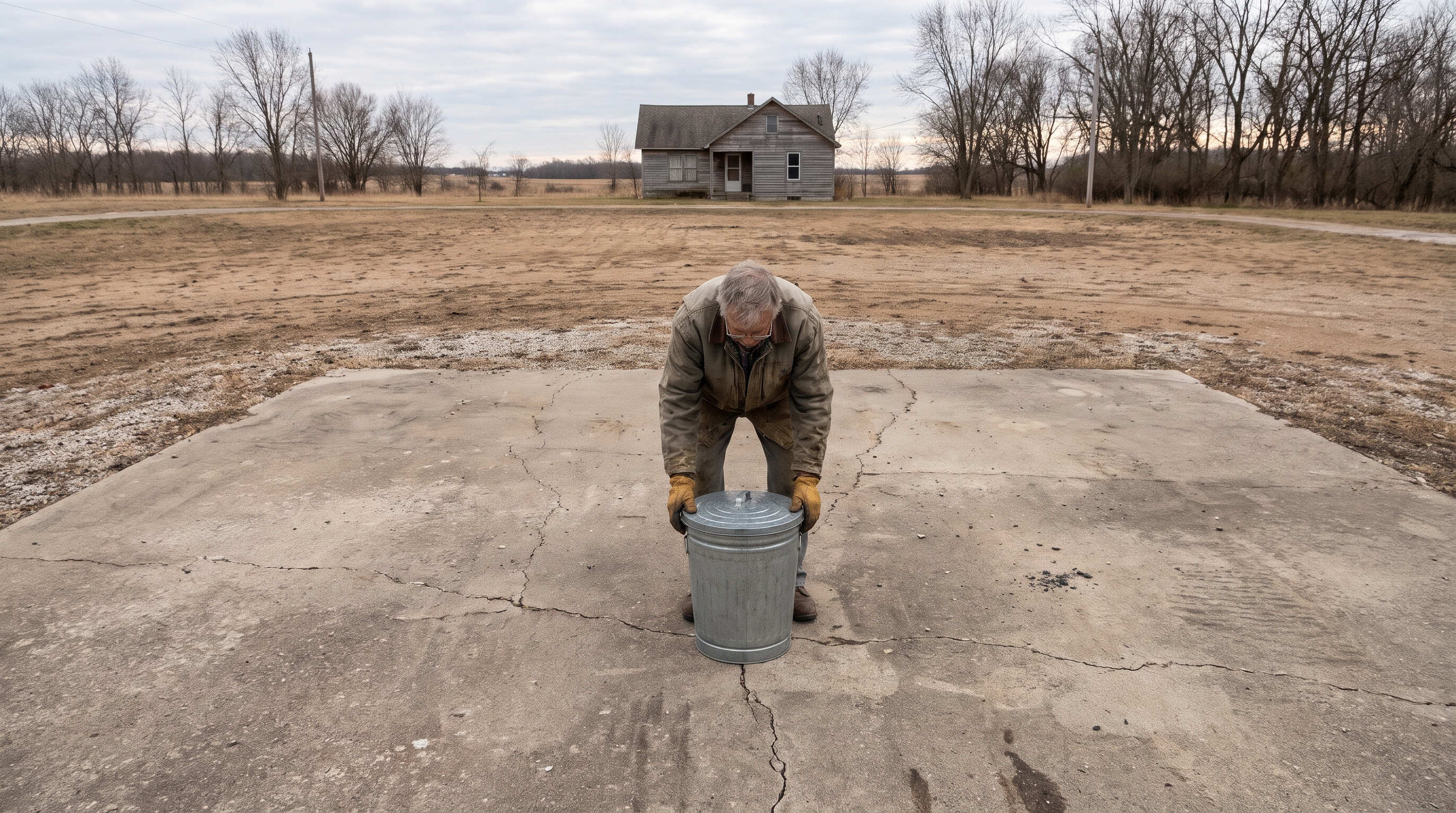
With the hearth and container cold, find a metal ash container with a metal lid that fits. Choose an outdoor, noncombustible spot at least ten feet from the home, away from anything that can burn. A wooden deck or porch is not that spot.
If suitable equipment is missing, add it to the list before using the fireplace. Keep hot-ash handling separate from today’s setup check.
HOUSEHOLD RESILIENCE NETWORK · BINDER WORKSHEET
Give Fireplace Ashes Their Own Place
Date: __________________
Metal ash-only container found?
Lid fits?
Outdoor surface and distance
Missing item to obtain before use
Status Check
Win: a lid fits, and the location is at least ten feet from the home on a noncombustible surface.
SPONSORED · 4Patriots
What could you keep running in a blackout?
Your phone is fading. The fridge has gone quiet. A rechargeable power station gives chosen devices another source of power. Could this one cover the essentials you would miss first?
The takeaway
Choose an ash-only metal container and a safe outdoor location. Keep the change small enough to finish, and leave a record you can check again.
Stay steady,
Ethan Archer
Homesteader Depot
Useful skills. A home that works.
P.S. Where does your household keep its ash container? Reply with the location. Share this with whoever tends the stove or fireplace.
One more useful read: Check which lid fits your cooking pan →
P.P.S. · 4 FOOT FARM BLUEPRINT
Start with one food your household already eats. See the $7 Black Friday Blueprint offer →
NWS: winter preparation this week
USFA: fireplace and ash safety
1736 Union Fire Company articles
Smithsonian: fire buckets
Ostia: fire-brigade barracks
Images are illustrative reconstructions, not archival photographs.