The Ming Dynasty built the greatest navy in human history — 3,500 ships, treasure fleets that dwarfed anything Europe had ever seen. Then in 1433, the emperor made one decision that changed everything.
He burned the fleet. Closed the ports. Made foreign trade a crime punishable by death.
The Haijin — the Sea Ban — was supposed to protect the empire. Instead, it strangled it. The silver supply collapsed. Prices spiked. Medicine became scarce. The peasants who survived the collapse weren’t the ones who waited for the imperial supply chain to recover.
They were the ones who had already built their own.
America is running the same experiment right now.
The new tariff regime is designed to protect American manufacturing. But the average household is already paying $600 to $700 more this year because of it. And while most people are watching the price of groceries and gasoline, a quieter crisis is building in the background.
Our pharmaceutical supply chain is more fragile than most people realize.
The vast majority of active pharmaceutical ingredients — the core compounds in the medications millions of Americans take every day — are manufactured overseas. When tariffs fracture global trade routes, the cost of basic medications rises. In a severe disruption, the supply simply stops arriving.
This is not a theory. It is a pattern that has repeated throughout history whenever governments use trade barriers to protect industries that are already hollowing out.
The question is not whether another supply chain shock is coming. The question is whether you will be ready when it does.
Step 1: Understand What You Are Actually Dependent On
Before you can build resilience, you need an honest inventory.
Most Americans have no idea how dependent they are on pharmaceutical supply chains until those chains break. Here is a simple exercise worth doing this week.
Open your medicine cabinet. Write down every supplement, over-the-counter medication, and prescription you take regularly. For each one, ask yourself: if this disappeared from pharmacy shelves for 90 days, what would happen to my health?
For many people — especially those managing blood pressure, joint pain, thyroid function, or blood sugar — the honest answer is uncomfortable.
This is not meant to frighten you. It is meant to motivate you. Because the good news is that most of the foundational health support your body needs can be sourced, grown, or stocked locally — if you start now, before the next disruption.
Step 2: Build Your Natural Medicine Cabinet
The families who thrived during historical supply chain collapses had one thing in common: they had already built local alternatives before the crisis hit.
You can do the same. Here are the foundational natural remedies that are easy to grow, widely available, and genuinely effective for common health concerns.
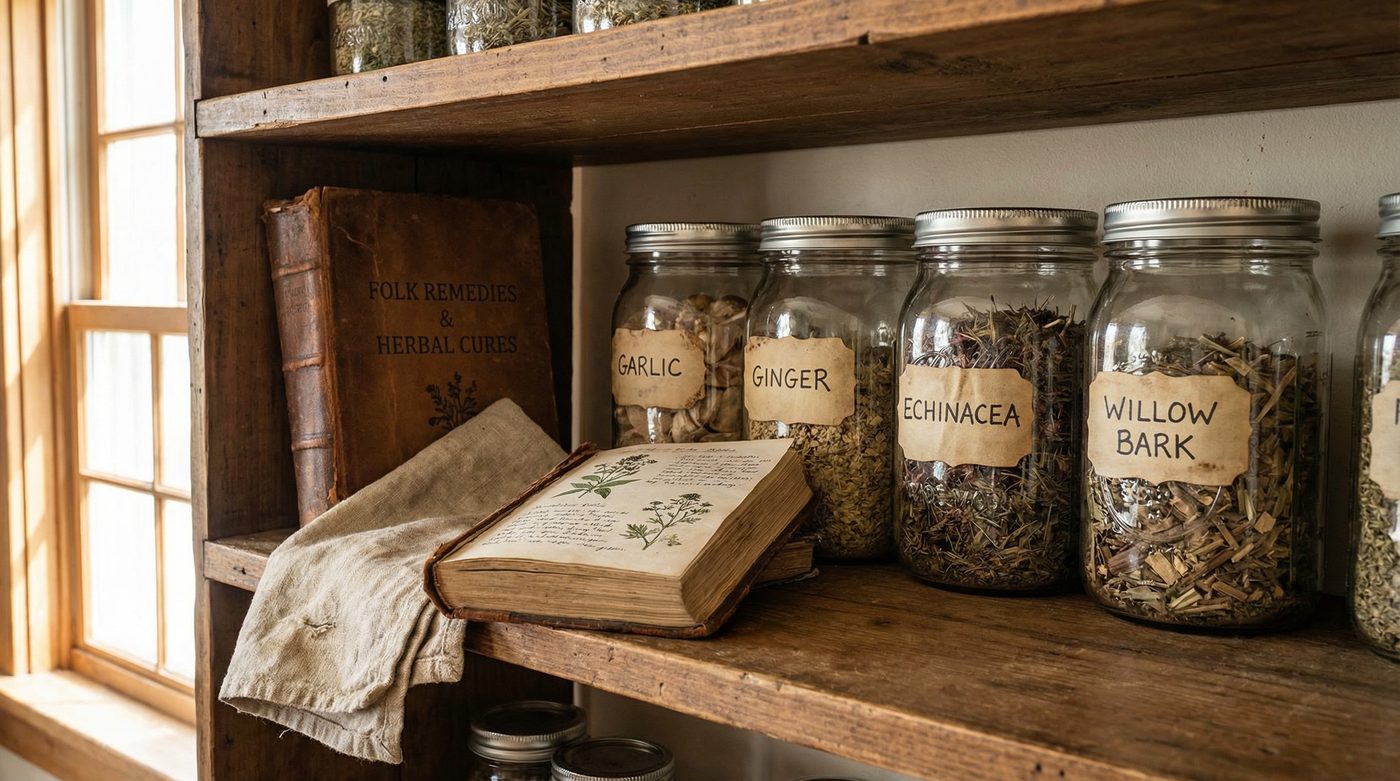
Willow Bark is the original aspirin. It contains salicin, the same compound that pharmaceutical companies synthesized into aspirin in the 1800s. A young willow tree costs about $20 to plant and will provide pain-relieving bark for decades. For joint pain and inflammation, a willow bark tea made from dried inner bark is a legitimate, time-tested remedy.
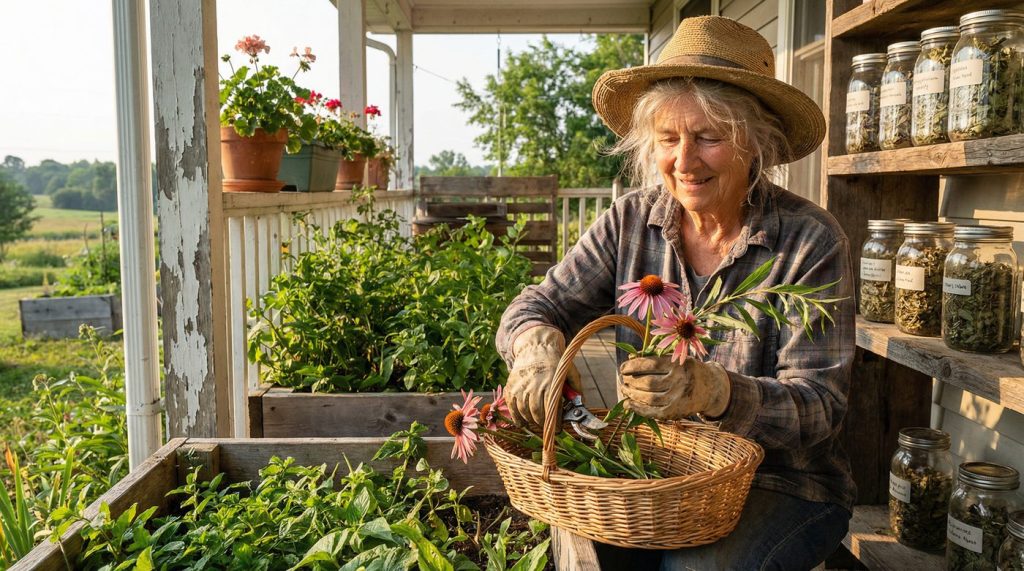
Echinacea is one of the most well-researched immune-supporting herbs in the world. It grows easily in most American climates, requires almost no maintenance, and comes back year after year. A packet of echinacea seeds costs less than $5. Plant it once and you have a renewable immune support resource for the rest of your life.
Garlic and Ginger are the workhorses of any natural medicine cabinet. Both have documented antibacterial, antiviral, and anti-inflammatory properties. Both can be grown in raised beds, containers, or even on a sunny windowsill. Fresh garlic costs pennies per clove to grow. Dried ginger root stores for months.
Elderberry has become one of the most popular natural immune supports in the country — and for good reason. Elderberry syrup made from dried elderberries, honey, and spices is genuinely effective at reducing the duration and severity of seasonal illness. An elderberry bush costs about $15 to plant and produces pounds of berries every fall.
Real Cost to Build a Starter Herb Garden
| Plant | Cost to Start | Ongoing Cost |
|---|---|---|
| Willow tree (young) | $20 | $0 — grows itself |
| Echinacea seeds | $5 | $0 — reseeds annually |
| Garlic bulbs (1 lb) | $8 | $0 — save cloves each year |
| Ginger root (starter) | $6 | $0 — grows back each season |
| Elderberry bush | $15 | $0 — produces annually |
| Total | ~$54 | $0 ongoing |
For less than the cost of a single doctor’s visit copay, you can establish a renewable medicine garden that will serve your family for decades.
Step 3: Secure Your Essential Minerals Before the Shortage Hits
While you can grow many foundational remedies, certain essential minerals are harder to source locally. And they are often the first things to disappear from store shelves during a supply chain disruption.
Magnesium is one of the most critical. It supports over 300 enzymatic processes in the body, including heart rhythm regulation, blood pressure management, sleep quality, and muscle function. Most Americans are already deficient. During periods of economic stress and elevated cortisol — exactly the kind of stress that comes with inflation and supply chain uncertainty — magnesium depletion accelerates.
If you want to ensure your body has what it needs to stay healthy during the turbulence ahead, securing a quality magnesium supply now — before the next shortage — is one of the highest-leverage health decisions you can make.
Secure your supply of high-quality Magnesium before the next shortage hits →
Step 4: Protect Your Vision and Joints — The First Things to Go Under Stress
Economic stress has a direct physical cost. When cortisol levels stay elevated for weeks and months — as they do during inflationary periods — the body pays a price.
For many people over 50, that price shows up first in two places: the joints and the eyes.
Joint inflammation increases under chronic stress. Dry, irritated eyes are often a sign of systemic inflammation rather than a surface problem. If you are already experiencing either of these issues, the stress of the current economic environment is likely making them worse.
The good news is that both respond well to targeted nutritional support — specifically omega-3 fatty acids, which reduce systemic inflammation and support both joint lubrication and tear film production in the eyes.
Discover why your eyes are dry and how to fix it from the inside out →
Step 5: Stock a 90-Day Supply of Your Critical Supplements
The final step is the simplest and the most overlooked.
Whatever supplements you currently rely on for your health — whether it is blood pressure support, thyroid support, joint support, or sleep support — stock a 90-day supply right now.
Not because the world is ending. But because supply chains are fragile, and the cost of being unprepared is always higher than the cost of being ready.
The Ming Dynasty’s peasants who survived the collapse were not the ones who waited for the imperial supply chain to recover. They were the ones who had already built their own local networks for food, medicine, and tools.
You have the same opportunity right now.
The Bottom Line
The tariff war is not just an economic story. It is a health story.
When supply chains fracture, the most complex products break first. Pharmaceutical ingredients are among the most complex products in global trade. The disruption is already beginning.
You cannot control the tariffs. You cannot control the global supply chain. But you can control what grows in your backyard, what sits on your shelf, and how prepared your body is for the turbulence ahead.
Start building your local health supply chain today.
Because when the pharmacy shelves go bare, the only medicine you will have is the medicine you have already secured.
For more on building food and health sovereignty at the homestead level, visit our sister property Self Reliance Report — dedicated to practical preparedness for real American families.