Right now, the U.S. government is in Day 32 of a shutdown. TSA agents are working without pay. Airports are facing closure. The political gridlock in Washington is paralyzing the nation.
It feels unprecedented. But it’s not.
Over 2,000 years ago, the Roman Republic faced the exact same crisis. The Senate stopped working. Factions fought for power. The institutions that people relied on simply broke down.
The Republic didn’t fall because it was conquered by an outside force. It fell because it stopped working from the inside out.
But here is the truth that history books often skip: The people who survived the collapse of the Roman Republic didn’t wait for the Senate to fix things.
They were the farmers, the builders, and the homesteaders who built local resilience. They relied on the land under their feet and the tools in their hands.
When the center cannot hold, those who build locally survive.
Today, you have the same choice. You can wait for the gridlock to end, or you can build your own foundation. Here are the modern equivalents of the tools Roman farmers used to survive institutional collapse — and exactly what you need to secure your homestead today.
1. The Roman Falcx (The Multi-Tool of Survival)
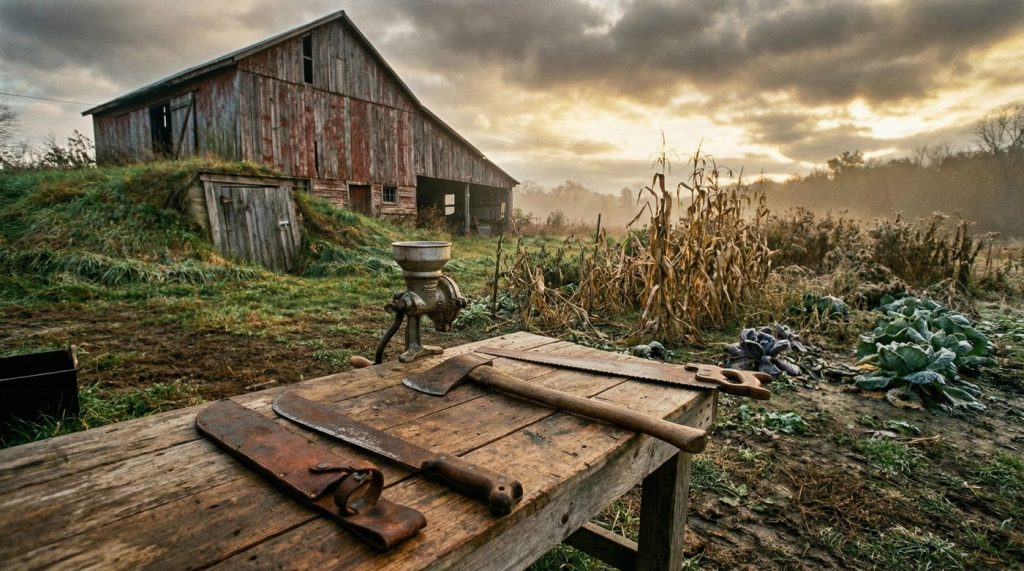
The Roman falcx was a curved blade used for everything from harvesting grain to clearing brush and even self-defense. It was the ultimate multi-tool for the Roman farmer. When supply chains broke down and you couldn’t buy specialized equipment, the falcx did the job of ten different tools.
The Modern Equivalent: The High-Carbon Machete or Brush Axe
You need a tool that doesn’t require fuel, electricity, or complex maintenance. A high-quality machete or brush axe is your modern falcx.
- Real Cost: $40 – $80
- Real Use: Clearing property lines, harvesting thick-stalked crops, processing firewood kindling, and maintaining defensible space around your home.
- Action Step: Invest in a full-tang, high-carbon steel blade. Keep it oiled and learn how to sharpen it with a basic whetstone.
2. The Quern (Food Sovereignty in Stone)
When the Roman grain dole — the government food subsidy — was interrupted by political chaos, city dwellers starved. But the rural farmers had the quern: a simple hand-cranked stone mill. With a quern, a family could turn raw, stored grain into flour for bread, completely independent of the government or the market.
The Modern Equivalent: The Manual Grain Mill
If the grid goes down or supply chains freeze, a pantry full of wheat berries is useless if you can’t process them. A manual grain mill gives you total control over your food supply.
- Real Cost: $150 – $300
- Real Use: Grinding wheat, corn, beans, and rice into usable flour without electricity.
- Action Step: Buy a cast-iron or heavy-duty aluminum hand mill. Secure it to a sturdy workbench. Stockpile whole grains — they last decades longer than pre-milled flour.
3. The Dolium (The Original Root Cellar)
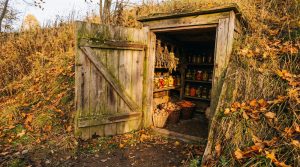
Romans didn’t have refrigerators. To survive the winter or periods of instability, they used dolia — massive earthenware jars buried partially in the ground to keep food cool and safe from pests. This was decentralized food storage at its finest.
The Modern Equivalent: The DIY Root Cellar or Subterranean Cache
You don’t need a massive underground bunker to store food effectively. You need a stable, cool environment that doesn’t rely on the power grid.
- Real Cost: $50 – $200 (DIY)
- Real Use: Storing root vegetables (potatoes, carrots, onions), fermented foods, and canned goods at a stable temperature year-round.
- Action Step: You can build a simple root cellar using a buried galvanized trash can or a modified chest freezer. Dig a hole below the frost line, insert the container, and insulate the top with straw and a heavy lid.
4. The Securis (The Builder’s Axe)
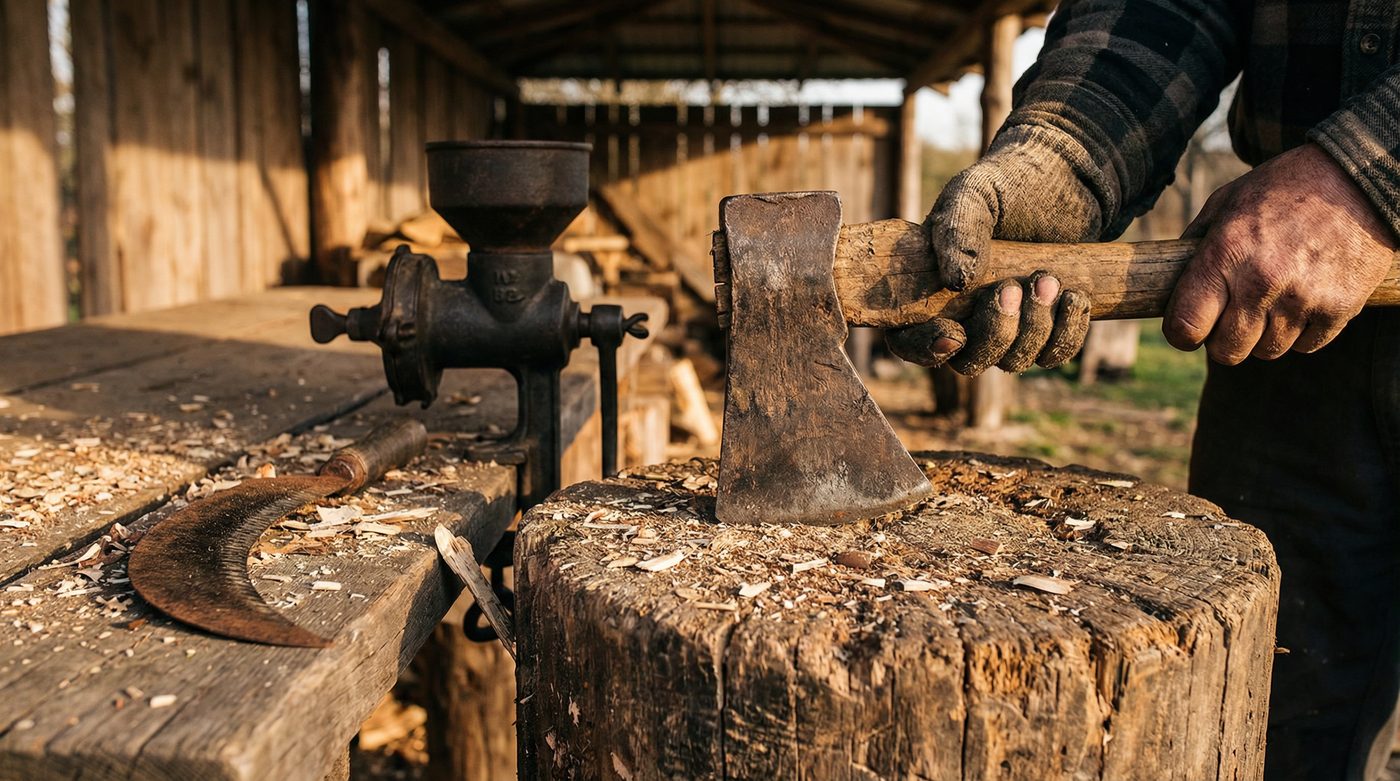
The securis was the standard Roman axe. It built the palisades, chopped the firewood, and framed the homes. When the Republic’s infrastructure crumbled, the ability to build and repair your own shelter was the difference between life and death.
The Modern Equivalent: The Felling Axe and Crosscut Saw
Power tools are great until the gas runs out or the battery dies. True tool sovereignty means having the manual capability to process timber.
- Real Cost: $75 – $150
- Real Use: Felling trees, bucking logs, and splitting firewood for heat and cooking.
- Action Step: Get a high-quality felling axe (like a Council Tool or Gransfors Bruk) and a two-man crosscut saw. These tools require sweat equity, but they will never fail you when the grid goes dark.
Your Homestead Is Your Republic
The Roman Republic’s collapse was a catastrophe for those who depended entirely on the state. But for those who had already built their own foundations, it was simply a transition.
Real wealth isn’t a government promise. It isn’t a supply chain that a single political dispute can sever. Real wealth is the land under your feet, the skills in your head, and the tools in your hands.
Don’t wait for the gridlock to end. Start building your local resilience today.
Next Steps for Your Homestead
If you’re ready to take your self-reliance to the next level, you need to look beyond just tools. You need a comprehensive plan.
Looking to secure your financial foundation while you build your physical one? Read the Beginner’s Guide to Gold and learn why physical assets are the ultimate hedge against political chaos.
Don’t let physical limitations stop you from building your homestead. Discover the 1 food that KILLS high blood pressure and keeps you working strong.
Also see: AmericanDownfall.com | SelfRelianceReport.com | 4ftFarmBlueprint.com