The Viking Age was the most expansive global network of its era. The Norse built trade routes from North America to the markets of Baghdad. They ruled a North Sea Empire spanning England, Denmark, and Norway.
Then, they simply stopped.
Not conquered. Not defeated. They just chose to stop reaching. The world moved on without them, and the Hanseatic League filled their trade vacuum.
America is making the same choice right now.
In early 2026, the U.S. withdrew from 66 international organizations. We slashed foreign aid. We cut NATO positions. We are walking away from the global supply chains we built and protected for 80 years.
And just like the Viking Age, the world isn’t waiting for us to return. China is stepping in to fill every vacated leadership position.
When an empire retreats, the supply chains it maintained go with it.
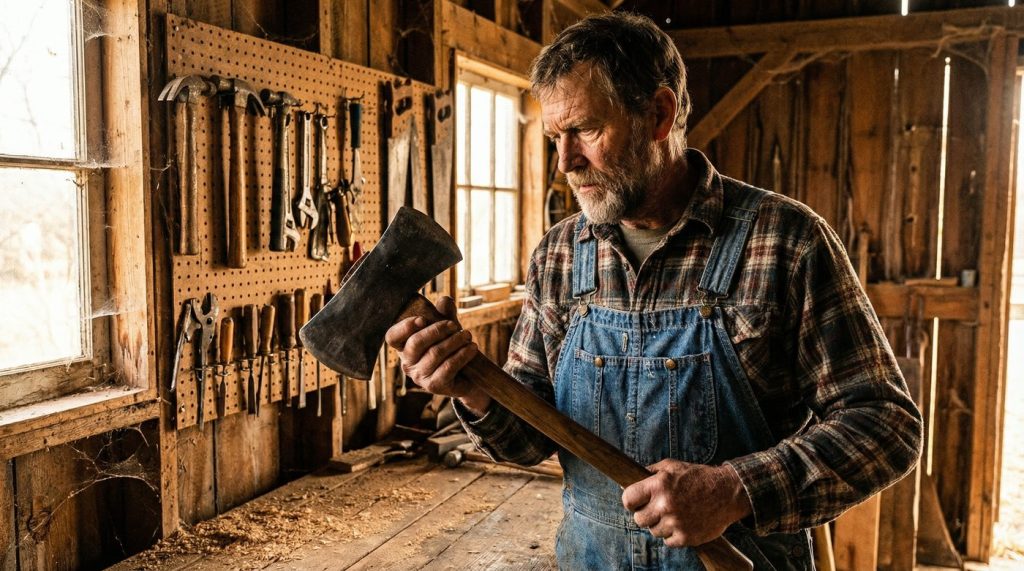
The people who survived the end of the Viking Age were not the ones who waited for the longships to return with foreign goods. They were the ones who built local resilience. They were the ones who knew how to make, fix, and provide for themselves.
Real wealth is the land under your feet and the tools in your hands. Not a supply chain that a single diplomatic withdrawal can sever. Not a global system that can simply choose to stop showing up.
Here is how you build your own tool sovereignty — the ultimate hedge against a retreating empire.
Section 1: The Foundation of Independence (Cost: $100 – $250)
You cannot build resilience if you have to run to a big-box store every time something breaks. The foundation of tool sovereignty is a core set of high-quality, non-electric hand tools.
When the grid goes down or the supply chain snaps, these are the tools that will keep your homestead running.
The Essential Hand Tool Kit:
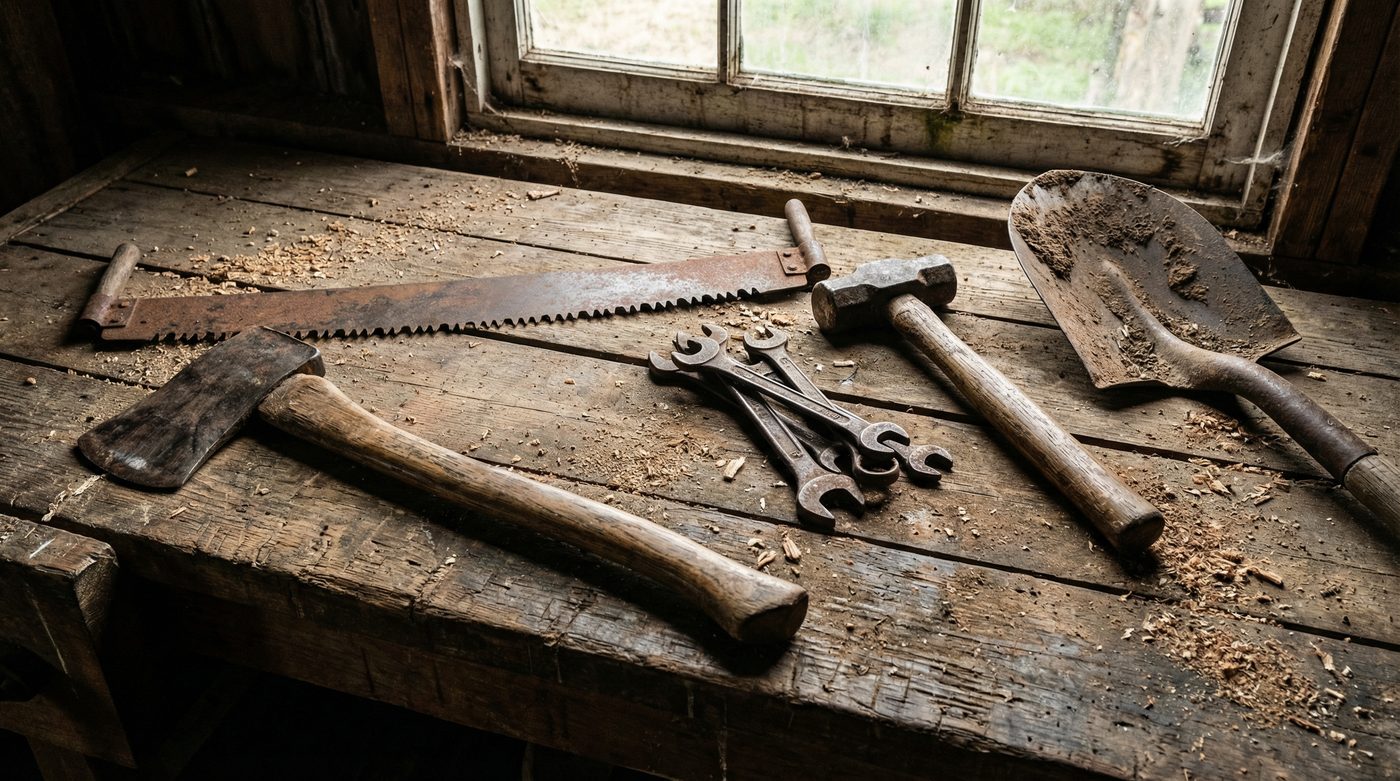
- A High-Quality Axe: Not a cheap hardware store hatchet. You need a forged steel felling axe (like a Gränsfors Bruk or Hults Bruk) that will hold an edge for decades.
- A Crosscut Saw: Chainsaws are great until you run out of gas or the carburetor clogs. A two-man crosscut saw or a high-quality bow saw is essential for processing firewood off-grid.
- A Comprehensive Socket and Wrench Set: You need to be able to repair your own equipment. A heavy-duty, lifetime-warranty set is non-negotiable.
- A Sturdy Shovel and Mattock: Digging trenches, moving earth, and managing water flow are constant homestead tasks. Don’t skimp on the handles — look for solid ash or fiberglass.
Actionable Steps:
- Audit Your Current Tools: Go through your garage or shed. Throw away the cheap, broken tools that will fail when you need them most.
- Invest in Quality: Buy the best hand tools you can afford. Think of them as generational wealth.
- Learn Basic Maintenance: A dull axe is dangerous and useless. Learn how to sharpen your blades and oil your wooden handles.
Section 2: The Power of Production (Cost: $300 – $800)
Once you have the basics to maintain your property, you need the tools to produce. This means moving beyond simple repairs and into the realm of building and fabricating.
This is where you truly separate yourself from the fragile global supply chain.
The Fabrication Arsenal:
- A Portable Generator or Solar Generator: You need a reliable way to run power tools when the grid is down. A 2000W inverter generator or a robust solar setup is critical.
- A Cordless Drill and Impact Driver: These are the workhorses of modern construction. Invest in a reliable 18V or 20V system and buy extra batteries.
- A Circular Saw: Essential for framing, building coops, and general carpentry.
- An Angle Grinder: For cutting metal, grinding welds, and sharpening tools in the field.
Actionable Steps:
- Standardize Your Batteries: Pick one brand for your cordless tools and stick with it. This ensures you always have a charged battery ready to go.
- Build a Dedicated Workspace: You need a sturdy workbench with a heavy-duty vise. This is the command center of your homestead production.
- Stockpile Consumables: Screws, nails, drill bits, and saw blades will become currency when the supply chain breaks. Buy them in bulk now.
Section 3: The Ultimate Resilience — The Forge and Anvil (Cost: $500 – $1,500)
What happens when you can’t buy a replacement part at all? What happens when the tool itself breaks beyond repair?
The ultimate level of tool sovereignty is the ability to make your own tools. This is the skill that outlasted the Roman Empire and the Viking Age.
The Basic Blacksmith Setup:
- An Anvil: A solid steel anvil (50 to 100 lbs) is the foundation. You can often find used ones at farm auctions or estate sales.
- A Forge: You can build a simple coal or charcoal forge yourself, or invest in a small propane forge for cleaner, more consistent heat.
- Hammers and Tongs: A basic cross-peen hammer and a few pairs of tongs will get you started.
- Safety Gear: Heavy leather apron, safety glasses, and heat-resistant gloves are mandatory.
Why This Matters:
- Absolute Independence: If you can forge steel, you can make knives, axes, hinges, nails, and repair parts for your equipment.
- A Barter Economy Skill: In a localized economy, the blacksmith is the most valuable person in the community.
- Generational Knowledge: This is a skill you can pass down to your children, ensuring their survival long after the current systems collapse.
Your Homestead Is Your Empire
The Vikings who survived the end of their global network didn’t wait for a political solution. They built a practical one.
Your homestead is your modern-day stronghold. While the world outside is consumed with the drama of retreating empires and shifting alliances, you can be quietly building a legacy of true independence.
Start with a single high-quality axe. Then build your fabrication skills. Then plan for a forge. Every tool you master is a declaration of your own sovereignty.
Noah didn’t wait for the rain to start building the ark. The storm is on the horizon. It’s time to get to work.
→ Click here to discover the timeless survival blueprint that outlasts any empire.